
Vietnamese Đồng: Collector's Guide to the Polymer Notes
Collector’s Reference · July 2026 · 9 min read
The Vietnamese Đồng: A Collector’s Guide to the World’s Most Colorful Polymer Money
Bright, plastic, and printed with pagodas, oil rigs, and Ha Long Bay — Vietnam’s polymer banknotes are among the most beautiful modern currency in circulation, and one of the most approachable series a collector can build.
Quick Answer
The Vietnamese đồng (sign ₫, code VND) is the currency of Vietnam, issued by the State Bank of Vietnam since 1978. Since 2003, every denomination of 10,000 đồng and above has been printed on polymer (plastic), and the 500,000 đồng is the highest-denomination note in circulation. As of early 2026 the đồng is one of the lowest-valued currency units in the world — behind only the Iranian rial and the Lebanese pound. For collectors, the polymer series is prized for its vivid color, its uniform Ho Chi Minh portrait, and a back-of-note tour of Vietnam’s landmarks.
What is the Vietnamese đồng?
The đồng has been Vietnam’s currency since May 3, 1978, when the reunified nation merged the separate currencies of the former North and South. The word đồng is the Sino-Vietnamese term for copper, a nod to the metal coins of earlier eras. Today the currency is issued by the State Bank of Vietnam, and — unusually for a modern economy — it circulates almost entirely as banknotes. Coins were reintroduced in 2003 but never caught on, and their distribution was withdrawn in 2011. As of the mid-2020s, no coins are in everyday use at all.
The 2003 polymer series: Vietnam’s current banknotes
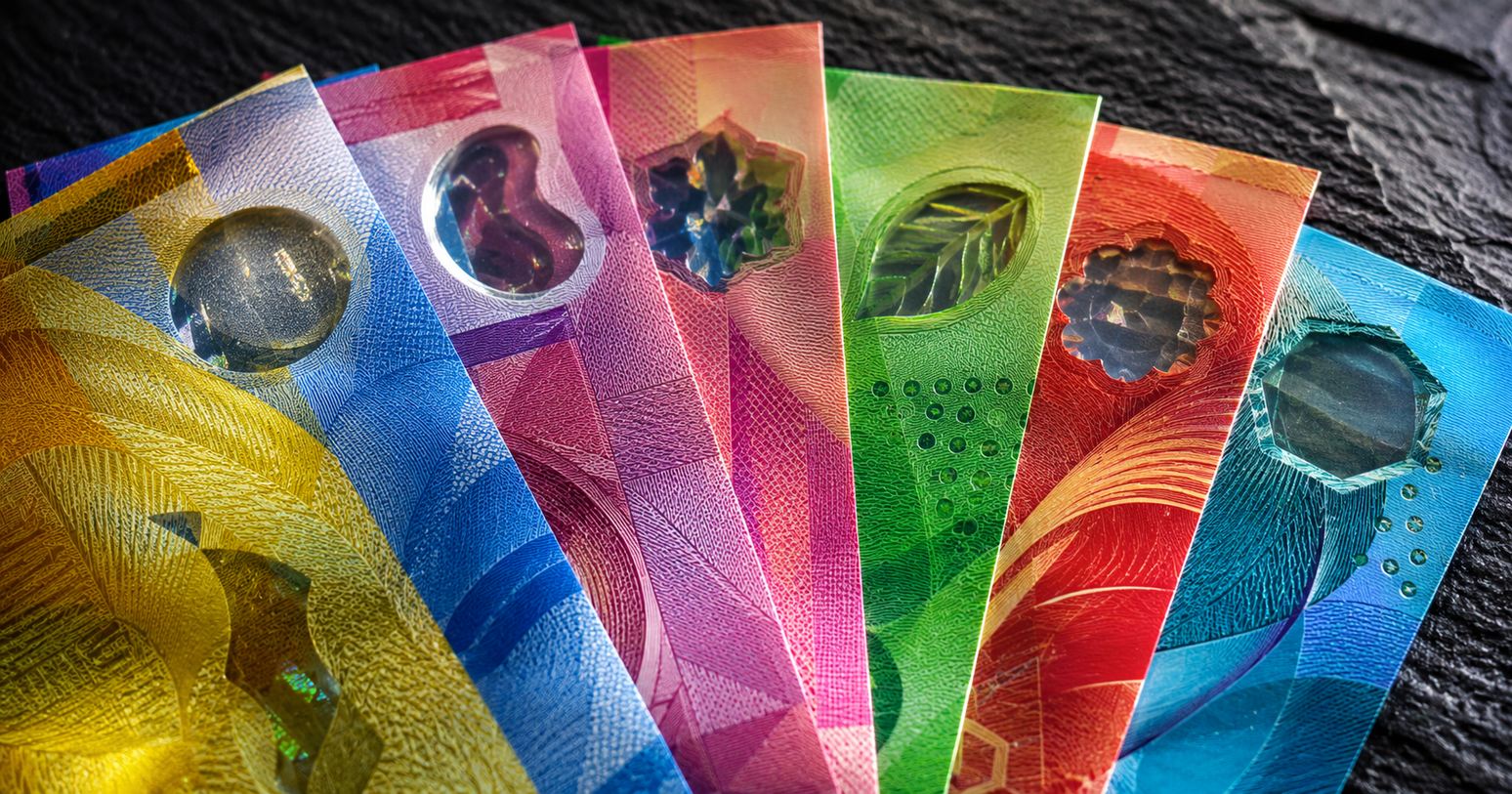
The notes a collector will handle most are the 2003 polymer series — the first Vietnamese banknotes with a unified design theme. Every note carries the same portrait of Ho Chi Minh on the front; the backs are where Vietnam shows off, each one a different landmark or scene. Here is the full set:
| Denomination | Color | Reverse design |
|---|---|---|
| 10,000 đồng | Yellow | Bạch Hổ (White Tiger) offshore oil field |
| 20,000 đồng | Blue | Japanese Covered Bridge, Hội An |
| 50,000 đồng | Pink | Nghinh Lương Pavilion & Phu Van Lau, Huế |
| 100,000 đồng | Green | Temple of Literature (Văn Miếu), Hanoi |
| 200,000 đồng | Red-brown | Hạ Long Bay |
| 500,000 đồng | Cyan | Ho Chi Minh’s birthplace, Kim Liên — highest denomination |
Lower values — 1,000, 2,000, and 5,000 đồng — remain in circulation on traditional cotton paper, which makes a complete “current Vietnam” set a pleasing mix of textures: crisp polymer for the big notes, soft cotton for the small ones.
What is the highest Vietnamese banknote?
The 500,000 đồng note is the highest denomination in circulation. Dark cyan-blue and first issued on December 17, 2003, it depicts Ho Chi Minh’s birthplace in the village of Kim Liên on the reverse. It sits at the top of a currency famous for its long ladder of zeros — the legacy of decades of monetary history rather than any single crisis.
Half a million on its face, a jewel in the hand — the đồng turns big numbers into small works of art.
Why did Vietnam switch to polymer banknotes?
Beginning in 2003, the State Bank of Vietnam replaced its cotton notes with polymer for all denominations of 10,000 đồng and above. The official rationale was durability and cost: polymer notes survive Vietnam’s heat and humidity far better than paper, resist tearing, and are harder to counterfeit thanks to clear windows and other security features. Vietnam joined a small club of countries — led by Australia — that had gone fully polymer at the high end, and the switch gave the đồng its signature glossy, jewel-toned look.
A short history of the đồng
Vietnam’s currency history is a story of revaluations. The đồng first replaced the French Indochinese piastre in the North in 1946, then went through revaluations in 1951 and 1959. After the fall of Saigon and reunification, the currency was unified nationwide on May 3, 1978. A 1985 revaluation — ten old đồng for one new — was meant to strengthen the currency but backfired spectacularly, helping push inflation to roughly 700% by September 1986. The Đổi Mới economic reforms of the late 1980s and 1990s eventually stabilized prices, but the đồng never recovered its former value — which is exactly why the notes carry so many zeros today.
How the đồng became one of the world’s lowest-valued currencies
As of early 2026, the Vietnamese đồng is the third-lowest-valued currency unit in the world, trailing only the Iranian rial and the Lebanese pound. That trio — rial, pound, đồng — forms a natural collecting theme: three currencies whose enormous denominations tell three very different stories, from sanctions to collapse to a decades-old revaluation that never fully healed. Unlike a hyperinflation note, the đồng’s low value is the product of slow, structural history rather than a sudden crisis — a distinction we unpack in our guide to the difference between hyperinflation and high-denomination notes.
What makes the đồng collectible — and where to start
Three things give the đồng its collector appeal. First, sheer beauty: the polymer notes are among the most colorful in the world, and they photograph brilliantly. Second, accessibility: even the 500,000 flagship is an attainable centerpiece, making a complete date-run a realistic goal for a collection at any level — a great fit for the approach in our beginner’s guide to world banknote collecting. Third, story: each note is a little travelogue of Vietnam, from the pagodas of Huế to the karst towers of Hạ Long Bay.
A natural starting point is the 500,000 đồng — the flagship of the series — followed by the full polymer run from 10,000 up. Collectors who enjoy contrast often add one of the older cotton notes, or the tiny 100 đồng bill, which is now so low in value that it survives mainly as a collectible curiosity.
Start your đồng collection
Crisp, uncirculated Vietnamese polymer notes — authenticated and shipped with a Certificate of Authenticity. The color has to be seen in hand.
Shop Vietnam Banknotes →Frequently asked questions
What is the highest Vietnamese đồng banknote?
The 500,000 đồng note is the highest denomination in circulation. It is dark cyan-blue, first issued in December 2003, and depicts Ho Chi Minh’s birthplace at Kim Liên on the reverse.
Are Vietnamese đồng notes made of plastic?
The higher denominations are. Since 2003, all notes of 10,000 đồng and above are printed on polymer (plastic). The lower 1,000, 2,000, and 5,000 đồng notes remain on cotton paper.
Why is the Vietnamese đồng worth so little?
The đồng’s low value traces to a botched 1985 revaluation that triggered roughly 700% inflation, followed by decades in which the currency stabilized but never regained its former value. It is a story of long-term structural history, not a sudden hyperinflation.
Whose portrait is on Vietnamese banknotes?
Every note in the current 2003 series carries a portrait of Ho Chi Minh on the front; the reverse of each denomination shows a different Vietnamese landmark.
Is collecting Vietnamese đồng a good place for beginners?
Yes. The polymer series is visually striking, historically rich, and easy to complete as a set, which makes it one of the friendliest modern world-currency series for new collectors.
Sources
- State Bank of Vietnam — currency in circulation and technical characteristics
- “Vietnamese đồng” — denomination, series, and exchange-rate history (Wikipedia, citing State Bank of Vietnam and Standard Catalog of World Paper Money)
- Banknote World — “500,000 Vietnamese Dong: The Story of a Historic Banknote”
Explore Popular Articles

Consecutive Serial Numbers: How to Buy Banknote Lots
Collector's Guide · Buying Guide · Updated October 7, 2026 Consecutive Serial Numbers, Explained: H...

Venezuela 200 Bolívares = 200 Million Old Bolívares
Collector's Guide · World Banknotes · Updated October 7, 2026 Venezuela's 200 Bolívares Note Equals...

Yugoslavia October Dinar 1993: All 10 Notes, Pick 128–137
Monetary History · September 30, 2026 · 8 min read Yugoslavia’s October Dinar, 1993: Six Zeros Off...

Venezuela 1,000,000 Bolívar Note (Pick 114), Explained
Collector’s Guide · September 29, 2026 · 7 min read Venezuela’s 1,000,000 Bolívar Note, Explained:...