
Fancy Serial Numbers on Banknotes: Odds & Guide
Collector's Guide · July 2026 · 9 min read
Fancy Serial Numbers on Banknotes: The Complete Collector's Guide
Two identical banknotes in identical condition can be worth wildly different amounts because of eight little digits. Here is every major fancy serial number type, why collectors chase them, and how to check the notes already in your drawer.
Quick answer: A fancy serial number is any serial number collectors consider special because of its pattern or position in the print run — solids (88888888), ladders (12345678), radars (12344321), repeaters (12341234), binaries, low numbers (00000001–00000100), and star/replacement notes. Rarity is mathematical: a true solid occurs roughly once in every 11 million notes. Fancy serials add a premium on top of a note's grade, and they occur on every country's currency — including famous world notes like the Zimbabwe 100 Trillion.
What are the fancy serial number types?
| Type | Example | Approximate odds |
|---|---|---|
| Solid | 88888888 | 1 in ~11.1 million |
| Ladder (perfect) | 12345678 | 1 in ~96 million |
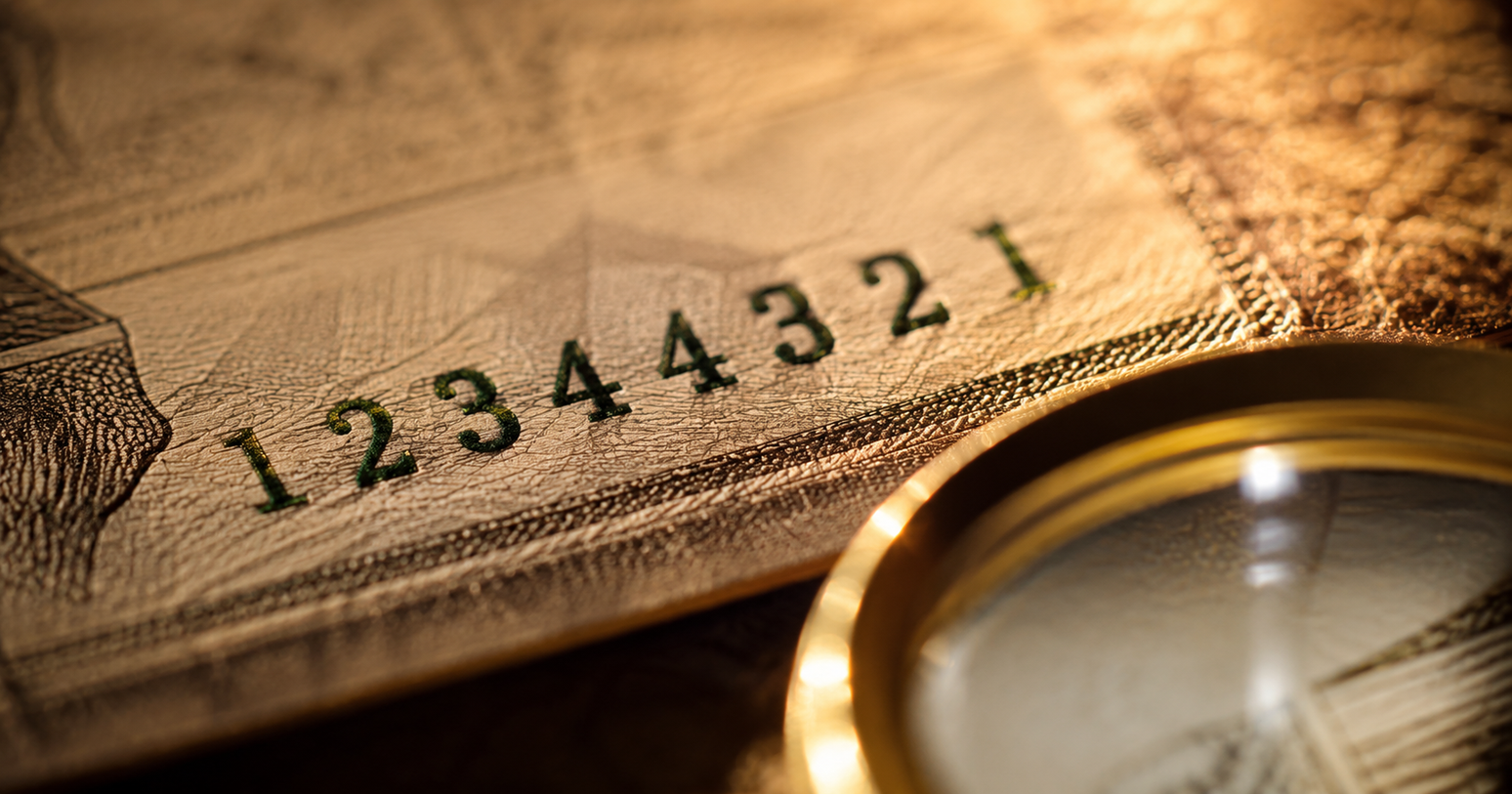
| Radar (palindrome) | 12344321 | 1 in 10,000 |
| Repeater | 12341234 | 1 in 10,000 |
| Binary | 01101001 | varies (two digits only) |
| Low serial | 00000042 | first 100 per block |
| High serial | 99999998 | last 100 per block |
| Birthday / date | 07041776 | depends on date |
| Star / replacement | *12345678 | printing-error replacements only |
Sub-types stack: a radar repeater (12211221), a super radar (all interior digits identical, like 27777772), or a low-serial star note multiply desirability because they satisfy several hunts at once.
Why do collectors pay premiums for fancy serials?
Three reasons, and they compound. Scarcity is provable. The odds above are arithmetic, not opinion — a solid exists once per 11.1 million notes printed, and no dealer can make more. The appeal is instant. Unlike watermarks or printing varieties, a ladder or solid needs no expertise to appreciate; it shows off to anyone. Cross-market demand. Fancy-serial collectors compete with country collectors and type collectors for the same physical note, and more bidders means stronger prices. The effect appears in every currency: U.S. small-size notes, polymer issues, and world notes alike.
Grade tells you how well a note survived. The serial number tells you how rarely it was ever born.
Do fancy serials matter on world banknotes too?
Absolutely — and this corner of the hobby is younger and less picked-over than U.S. fancy-serial collecting. Hyperinflation notes are a natural fit: enormous print runs mean the patterns exist, but chaotic circulation means few survived in collectible condition. A Zimbabwe 100 Trillion with a radar or a very low serial is a crossover trophy claimed by two collecting communities at once. Grading services recognize this — PMG attributes fancy serial numbers on the certification label, permanently marrying the pattern to the grade. If you are weighing certification, our guide on raw versus graded banknotes walks through when the holder pays for itself.
What about consecutive serial numbers?
Consecutive runs are the team sport of serial-number collecting: two or more notes numbered in unbroken sequence. A consecutive pair or run proves the notes have traveled together since the printing works — which is why intact runs carry a premium over the same notes scattered. For famous notes with heavy counterfeiting, consecutive provenance doubles as authentication — a point our reference on the surviving 100 Trillion population makes in detail.
How to hunt fancy serials in your own collection
1. Read every serial, both sides of the room. Check notes you already own, then wallet change, then family stashes. Fancy serials hide in plain sight because nobody looks.
2. Learn the block structure. Serials repeat across prefix blocks, so "low" means low within a block — 00000042 is collectible in any prefix.
3. Prioritize condition. A fancy serial on a gem uncirculated note is a trophy; the same serial on a torn note is a curiosity. Pattern premium multiplies grade, it does not replace it.
4. Get real patterns certified. Attribution on a PMG or PCGS label makes the premium portable when you sell.
5. When buying, verify the photo. The serial in the listing image should match the note you receive — serious dealers photograph the exact note and say so.
Frequently asked questions
What is the rarest fancy serial number?
The perfect ladder (12345678) is the statistical king at roughly 1 in 96 million notes, followed by solids at about 1 in 11.1 million. Serial 00000001 of any given block is a one-of-one and commands the strongest premiums of all.
Do fancy serial premiums apply to circulated notes?
Yes, but modestly. The strongest premiums attach to uncirculated examples where the pattern and the condition are both exceptional.
Does PMG note fancy serials on the label?
Yes. PMG attributes recognized fancy serial types (radar, repeater, solid, low serial, and others) directly on the certification label, which preserves the attribution permanently.
Are star notes the same as fancy serials?
Star (replacement) notes are their own category — printed to replace defective sheets and identified by a star or distinct prefix. Collectors group them with fancy serials because both derive value from the serial-number system rather than the design.
Is a consecutive run better than one fancy serial?
Different collections, different answers. A fancy serial is a single trophy; a consecutive run is provenance and authentication you can hold. Advanced collectors of modern world notes increasingly want both.
Sources
PMG — fancy serial number attribution standards (pmgnotes.com)
U.S. Bureau of Engraving and Printing — serial numbering and star note practices (bep.gov)
Standard Catalog of World Paper Money (Pick numbering system)
Serials you can verify
Every note at Planet Banknote is photographed as the exact note you receive, Planet Banknote Verified, and shipped with a COA — and the graded wall carries PMG- and PCGS-certified examples with serials on the label.
Explore Popular Articles

How to Read a PMG Banknote Label, Line by Line
Collector's Guide · Grading · October 2026 How to Read a PMG Banknote Label, Line by Line A PMG lab...

How to Frame a Banknote Without Damaging It
Collector's Guide · Storage and Display · October 2026 How to Frame a Banknote Without Damaging It...

Banknote Gifts for Collectors: 2026 Holiday Guide
Collector's Guide · Gift Guide · October 2026 Banknote Gifts for Collectors: The 2026 Holiday Guide...

Teaching Inflation With Real Banknotes: A Classroom Guide
Collector's Guide · Education · October 2026 How to Teach Inflation With Real Banknotes A percentag...