
How to Frame a Banknote Without Damaging It
Collector's Guide · Storage and Display · October 2026
How to Frame a Banknote Without Damaging It
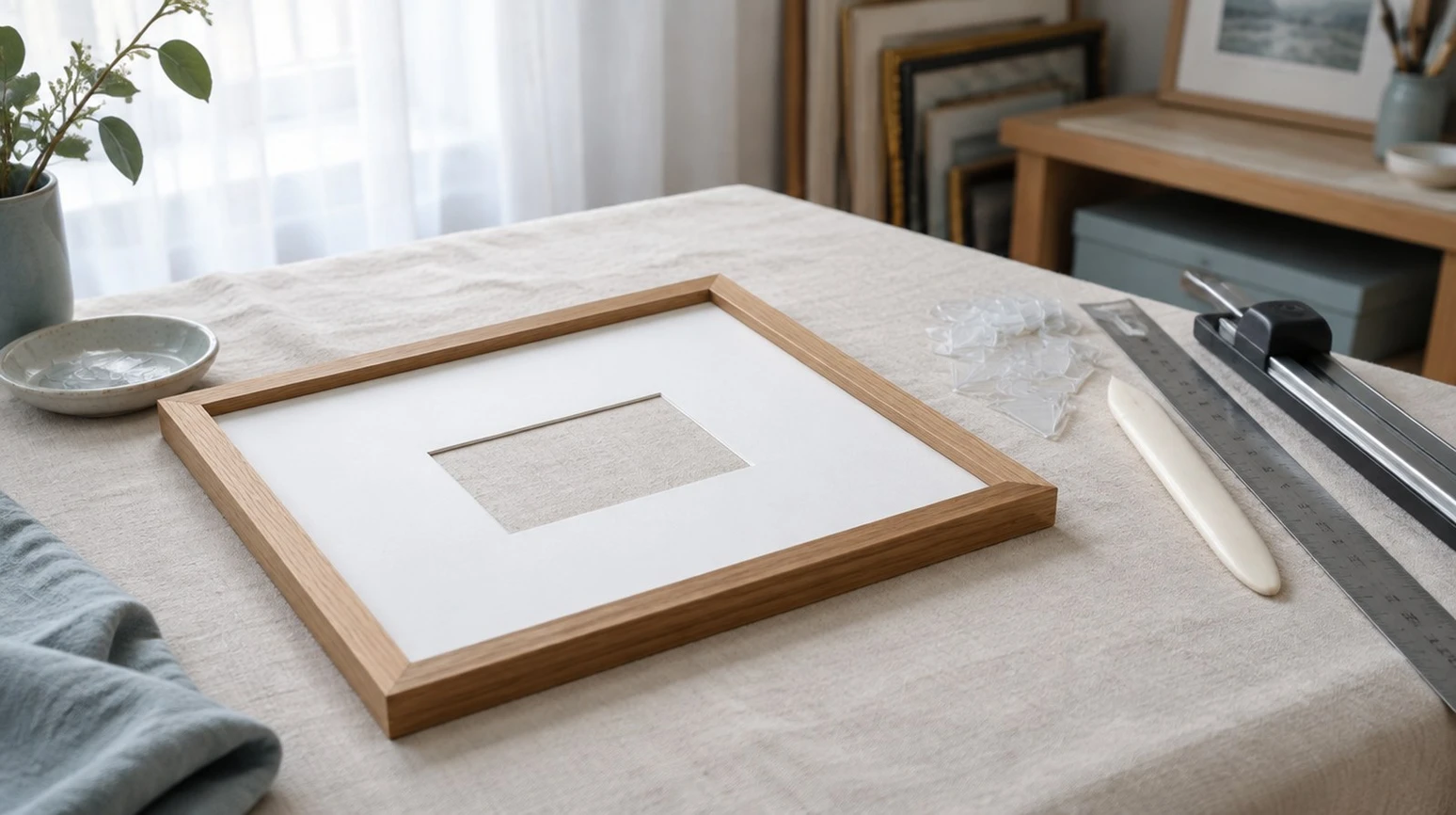
A frame is the best way to show a note off and the quickest way to fade one. Here is how conservators frame paper, translated for a single banknote, with exact sizes for the Zimbabwe 100 Trillion.
The short answer
Use glazing that filters at least 99 percent of UV light, a 100% cotton rag mat, and photo corners or a polyester sleeve instead of tape or glue. Keep the note from touching the glass. Hang it on an inside wall, out of direct sun and away from heat vents, radiators and bathrooms. If the note is in a PMG holder, frame the holder, not the note.
What do you need to frame a banknote safely?
Five parts, and each one has a cheaper version that slowly harms paper. The left column is what the Northeast Document Conservation Center and the Library of Congress recommend for works on paper. A banknote is a small work on paper, so the same rules apply.
| Part | Use | Avoid |
|---|---|---|
| Glazing | Glass or acrylic that filters at least 99% of UV light | Ordinary picture glass, or no glazing at all |
| Mat | 100% cotton rag board, 4-ply or 8-ply | Wood-pulp mat board, foam board, kraft paper |
| Attachment | Photo corners or edge strips fixed to the backing board, or an inert polyester sleeve | Any tape on the note, glue, spray adhesive, dry mounting, lamination |
| Spacing | A thick window mat or spacers, so the note never touches the glazing | A note pressed flat against the glass |
| Backing | Lignin-free board, with a moisture barrier behind it | Corrugated cardboard, or bare wood behind the note |
The Library of Congress also prefers an overmat, a window that overlaps the edges of the note, to floating the note in an open window. The overlap holds the note flat and keeps fingers off it if the frame is ever opened.
Should you use tape, glue or lamination on a banknote?
No, never on the note itself. NEDCC warns against commercial adhesives and self-adhesive tapes, including tapes sold as archival, because they fail and stick to the object. Lamination is worse: it fuses plastic to the paper with heat and adhesive and cannot be undone.
There is a collector's reason too. Grading services judge the paper. PMG reserves its EPQ designation, Exceptional Paper Quality, for notes whose paper is original and unprocessed, and any Gem Uncirculated 65 or higher grade requires it. A note that has been taped or laminated has left that conversation for good. Photo corners and polyester sleeves hold a note without touching its surface with anything sticky, and the note comes out exactly as it went in.
What size mat opening fits a Zimbabwe 100 Trillion?
The 2008 Zimbabwe 100 Trillion measures 148 by 74 millimeters, about 5.83 by 2.91 inches. For an overmat, cut the window about 1/8 inch smaller than the note on every side, so the mat covers a thin edge all the way around.
| Display | Mat window | Common frame size |
|---|---|---|
| One note, front | 5 9/16 x 2 5/8 in (141 x 67 mm) | 8 x 10 in |
| Two notes, front and back side by side | Two windows, each 5 9/16 x 2 5/8 in | 11 x 14 in |
| Five consecutive notes, stacked | Five windows, each 5 9/16 x 2 5/8 in | 11 x 17 in or 16 x 20 in |
| One note in a PMG holder | Sized to the holder, not the note | Shadow box deep enough for the holder |
The frame sizes are common stock sizes, not rules. A framer will size the outer mat to taste. What matters is the window, the materials and the gap between the note and the glazing.
How do you show both sides of a banknote in a frame?
The back of the 100 Trillion is half the reason to own one. The front shows the Domboremari, the balancing rocks near Epworth that have been a regular feature of Zimbabwe's notes since the early 1980s. The reverse shows Victoria Falls and a Cape buffalo. A single-sided frame hides the falls against the wall.
There are two clean ways to show both:
- A double-glazed float frame. Two panes of UV-filtering glazing with the note between them in an inert polyester sleeve, held at the edges so it touches neither pane. NEDCC is firm that an object should never touch the glazing; the sleeve and spacers take care of that.
- Two notes, side by side. One face up, one face down, each in its own window. It is the easiest way to display both designs at once, and the two serial numbers make a nice detail if they are consecutive.
Light damage on paper only adds up. A frame can filter ultraviolet light, but it cannot undo what a sunny wall does over ten years.
Where should you hang a framed banknote?
On an inside wall, out of direct sunlight, away from fireplaces, radiators and air vents, and not in an attic, basement or bathroom. That list comes straight from the Library of Congress. Exterior walls swing in temperature and collect condensation; inside walls do not.
Museums are stricter than any home needs to be, but their numbers are a useful yardstick. The National Archives keeps documents on exhibit at 65 to 75 degrees Fahrenheit and 35 to 50 percent relative humidity. The Conservation Center for Art and Historic Artifacts recommends a maximum of 50 lux for works on paper, about the light in a dim living room, and limits exhibition to three months every five years. A note on a bright wall year-round is getting far more light than a museum would ever allow.
The practical answer at home: pick a dim wall, keep the blinds drawn on the sunny side of the room, and if a note is valuable to you, rotate it. Frame one example and keep a second in a sleeve, or swap them every few months. Our guide to storing banknotes in sleeves and holders covers the note that is not on the wall.
Can you frame a PMG-graded banknote?
Yes, and you should frame it inside its holder. PMG's fourth-generation holder, introduced in 2016, is made of inert materials and is clear enough to show both sides of the note, which solves the two-sided problem by itself. Taking a note out of the holder ends its certification; it would have to be resubmitted to PMG to be graded again.
Before you frame a graded note, write down the certification number and grade. Labels made since September 2022 carry a QR code on the back, and once the holder is mounted, the back is against the backing board. With the number on file, anyone can check the note on PMG's verification page without opening the frame. Our post on PMG grading and EPQ explains what the numbers on the label mean.
What should you ask a picture framer for?
Use the conservators' words, because framers know them:
- Conservation framing or museum framing, not standard framing.
- UV-filtering glazing, 99 percent or better.
- 100% cotton rag mat, 4-ply or 8-ply, cut as an overmat.
- No adhesive on the note. Photo corners or edge strips on the backing board, or a polyester sleeve.
- A gap between the note and the glazing, from a thick mat or spacers.
- A lignin-free backing with a moisture barrier, and a sealed back.
If the framer suggests dry mounting or spray adhesive to keep the note flat, say no and take it elsewhere. A flat note in corners under an overmat stays flat without either.
Framing a 100 Trillion as a gift? Our 2026 holiday guide to banknote gifts has wrapping advice and this year's mailing dates.
Frequently asked questions
Does sunlight fade banknotes?
Yes. Light damage to paper and ink is cumulative and permanent, and ultraviolet light does the most of it. Glazing that filters at least 99 percent of UV removes the worst of it, but visible light still fades a note over years, which is why conservators recommend no more than 50 lux for paper on exhibit and rotate it off display.
Can I use regular picture-frame glass?
It is better than nothing, but conservators specify glazing that filters at least 99 percent of UV, such as conservation-grade glass or UV-filtering acrylic. Ask a framer for it by name. The price difference on a frame this small is modest.
Is it OK to laminate a banknote?
No. Lamination bonds plastic to the paper with heat and adhesive, and it cannot be reversed. It also ends any chance of the note being graded on its original paper. Use a polyester sleeve or photo corners instead.
Will framing lower a banknote's value?
Framing done right does not. A note held by corners or in a sleeve comes out exactly as it went in. Tape, glue, dry mounting, lamination and sun fading are what cost a note its grade.
How do I show both sides of a banknote in a frame?
Use a double-glazed float frame with the note in an inert polyester sleeve, held so it does not touch either pane. Or frame two notes side by side, one face up and one face down.
Can I take a note out of its PMG holder to frame it?
You can, but the note is no longer certified once it leaves the holder, and it would have to be resubmitted to be graded again. Frame the holder instead. Write down the certification number first, because the back of the label may be hidden once it is framed.
Sources
- Northeast Document Conservation Center: Matting and Framing for Art and Artifacts on Paper (Leaflet 4.10)
- Library of Congress: Matting and Framing Paper Items
- CCAHA: Matting and Framing Paper Objects (PDF)
- CCAHA: Light Exposure for Artifacts on Exhibition (PDF)
- National Archives: Technical Guidelines for Borrowing Holdings
- PMG: The PMG Holder and Label
- PMG: Learn Grading, What Is the PMG Star Designation?
- Wikipedia: Zimbabwean one hundred trillion dollar note
The note for the frame
An uncirculated 2008 Zimbabwe 100 Trillion, AA prefix, Pick 91. $129 as of October 2026. Buy two and frame the falls next to the rocks.
See the 100 Trillion
Explore Popular Articles
How to Read a PMG Banknote Label, Line by Line
Collector's Guide · Grading · October 2026 How to Read a PMG Banknote Label, Line by Line A PMG lab...
How to Frame a Banknote Without Damaging It
Collector's Guide · Storage and Display · October 2026 How to Frame a Banknote Without Damaging It...

Banknote Gifts for Collectors: 2026 Holiday Guide
Collector's Guide · Gift Guide · October 2026 Banknote Gifts for Collectors: The 2026 Holiday Guide...

Teaching Inflation With Real Banknotes: A Classroom Guide
Collector's Guide · Education · October 2026 How to Teach Inflation With Real Banknotes A percentag...