
Collecting U.S. National Bank Notes: Charter Numbers & Rarity Guide
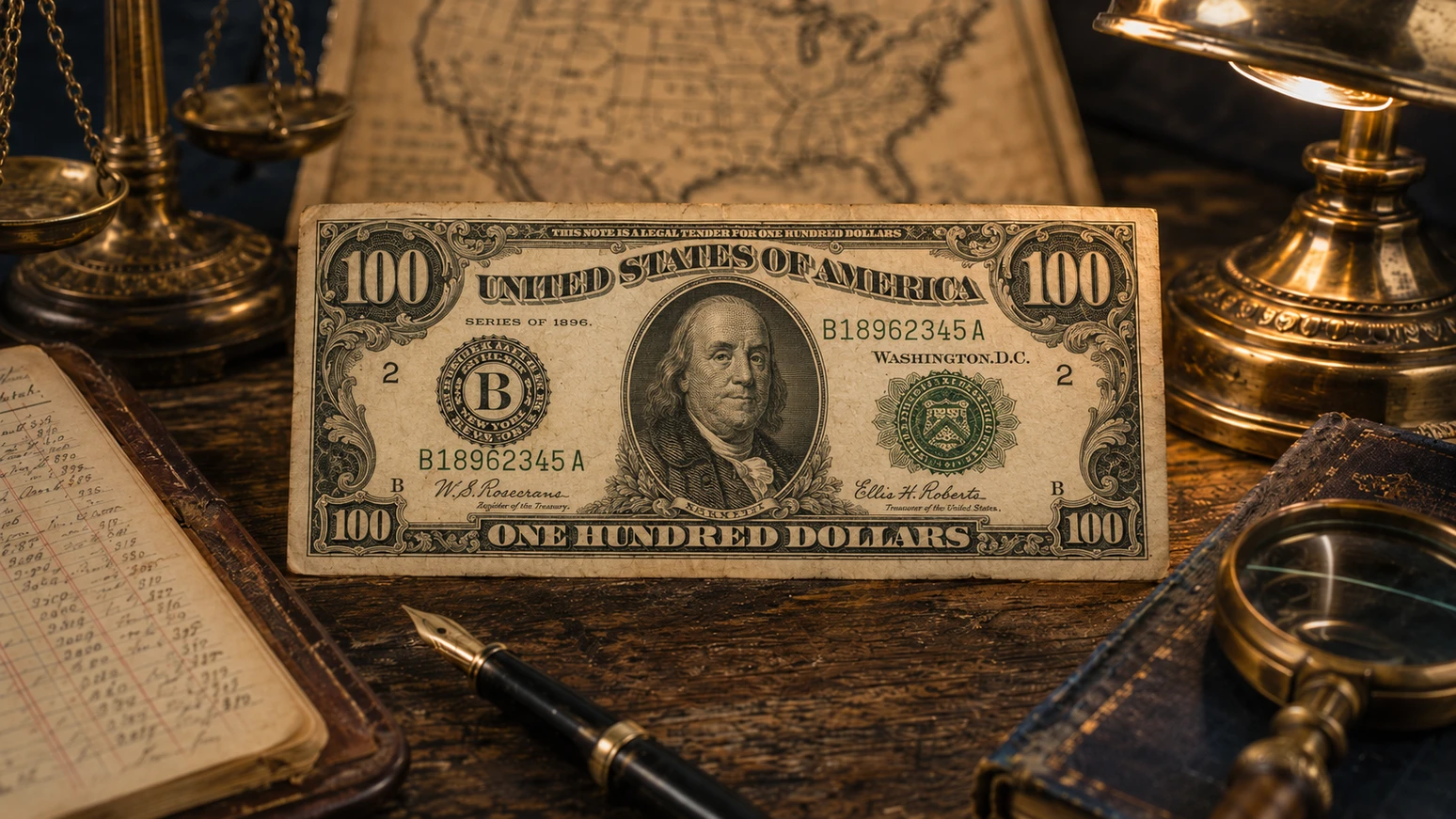
Collecting U.S. National Bank Notes: Charter Numbers, Rarity, and What’s Hot in 2026
A Complete Guide to America’s “Hometown Notes” — Three Charter Periods, 14,348 Banks, and the Trophy-Tier Rarities Driving the Modern Market
Of all the categories in U.S. paper money collecting, none combines history, geography, and rarity as completely as National Bank Notes. From 1863 to 1935, these were America’s “hometown notes” — currency printed by the U.S. Bureau of Engraving and Printing on behalf of more than 14,000 federally chartered local banks, each issuing notes that bore the bank’s name, its town, and its unique federal charter number. A National Bank Note from a small-town Florida bank in the 1880s isn’t just currency; it’s a documented artifact of a specific community at a specific moment in American economic history.
For collectors, that combination is irresistible. Every note has a story tied to a real place and real people. Every charter number traces back to a specific bank with a specific history — some flourishing, some failing in spectacular ways, some serving frontier towns that no longer exist. And because the surviving population of any given bank’s notes is often measured in single digits, Nationals offer something rare in modern collecting: documented, verifiable scarcity at the bank-by-bank level. This guide covers everything you need to start collecting them seriously in 2026.
What Are National Bank Notes?
National Bank Notes were authorized by the National Banking Acts of 1863 and 1864, signed into law during the Civil War to create a unified national currency and finance the Union war effort. Before the Acts, the United States had no single national paper money — instead, more than 1,500 state-chartered private banks issued their own notes, often poorly backed and frequently worthless. The 1863 legislation changed that by establishing federally chartered National Banks that could issue currency under federal oversight, backed by U.S. Treasury bonds.
The mechanism was elegant. A bank seeking a national charter would deposit U.S. government bonds with the Treasury. In return, it received the right to issue National Bank Notes worth up to 90% of the bonds’ par value. The notes were printed by the Bureau of Engraving and Printing using standardized federal designs but customized with the issuing bank’s name, location, charter number, and the signatures of its president and cashier. The federal government guaranteed redemption, which gave Nationals broad acceptance nationwide.
The system created a powerful symbiosis: banks needed government bonds to issue notes, which created sustained demand for federal debt, which financed the war and post-war federal operations. From 1863 through 1935, an astonishing 14,348 different banks were chartered to issue National Bank Notes. The system was retired in 1935 when the Treasury called in the bonds backing the notes, consolidating U.S. paper currency into Federal Reserve Notes. National Bank Notes remain legal tender to this day — but they are vastly more valuable as collectibles than at face value.
The Three Charter Periods: How to Identify What You’re Looking At
National Bank Notes were issued across three distinct “Charter Periods” over the 72-year history of the program, plus a final small-size series. Each Charter Period reflects the 20-year lifespan of a bank’s federal charter — when charters were renewed, the resulting notes received new designs. Understanding the visual differences between the periods is the foundation of identifying any National Bank Note.
| Charter Period | Date Range | Key Visual Identifiers | Charter Numbers |
|---|---|---|---|
| First Charter (Original Series & 1875) | 1863–1882 | Large red Treasury seal, ornate engravings, green or black backs | 1–3,254 |
| Second Charter (Brown Backs, Date Backs, Value Backs) | 1882–1902 | Brown Back: brown reverse with charter number prominent. Date Back: green back with “1882-1908” large dates. Value Back: green back with denomination spelled out | 2,406–6,564 |
| Third Charter (Red Seals, Date Backs, Plain Backs) | 1902–1929 | Red Seal (1902–1908), Blue Seal Date Back (1908–1916), Blue Seal Plain Back (1916–1929) | 5,243–13,159 |
| Small-Size Nationals (Series of 1929, Type 1 & Type 2) | 1929–1935 | Modern small format with brown Treasury seal and brown serial numbers. Type 2 (1933–1935) adds charter number in brown alongside serial numbers | Various; only banks active 1929+ |
The First Charter Period notes are the most visually elaborate and the rarest in high grades. The classic First Charter back design features one of three iconic vignettes: “Landing of the Pilgrims” on the $5, “DeSoto Discovering the Mississippi” on the $10, “Battle of Lexington” on the $20, and so on. Brown Back notes from the early Second Charter Period are particularly prized for their ornate engraved bank names and prominent charter number displays. The 1902 Red Seal notes from the Third Charter Period are among the most popular collector pieces, combining striking visual design with relative attainability.
Charter Numbers: The Master Key to Every National Bank Note
Every National Bank Note issued from 1875 forward bears its issuing bank’s federal charter number, printed prominently — usually twice — on the face of the note. Earlier First Charter notes from 1863 to 1875 do not carry charter numbers on their face, but the issuing bank can still be identified through the printed bank name and town.
Charter numbers were assigned sequentially as banks received their federal charters from the Office of the Comptroller of the Currency. The First National Bank of Philadelphia received Charter #1 in 1863. The 14,348th and final National Bank received its charter shortly before the program ended in 1935. The lower the charter number, generally speaking, the earlier the bank entered the system — and earlier banks tend to command higher collector premiums for that historical primacy.
- Approximate charter year — charter numbers are roughly chronological, so the number indicates when the bank entered the system.
- Geographic identification — combined with bank name and town, the charter number uniquely identifies the issuing bank in census databases.
- Survival population data — the National Bank Note Census tracks surviving notes by charter number, providing exact scarcity data unavailable for almost any other collectible currency category.
- Bank history — public databases like the National Bank Lookup tool maintained by the Society of Paper Money Collectors provide bank open/close dates, officer names, and full issuance histories for every charter.
This last point is what makes National Bank Notes unique. For most U.S. paper currency, you can know the series, the denomination, and the printing variety. For Nationals, you can also know the exact bank, the exact town, the exact period of issuance, the exact officers who signed the note, and in many cases, the exact number of surviving examples known to exist. No other category of U.S. paper money offers this depth of provenance.
What Drives Value: The Six Factors That Determine What a National Is Worth
National Bank Note values can range from a few hundred dollars for common notes from large city banks to $40,000 or more for trophy-tier rarities. Six factors drive nearly every pricing decision in the market:
1. Bank rarity (the dominant factor). Some banks issued tens of thousands of notes; others issued only a few hundred. The total surviving population of any given bank’s notes is often the single largest determinant of value. A common note type from a rare bank can sell for ten or twenty times the same type from a common bank.
2. Condition and grade. National Bank Notes circulated heavily through commerce for decades. Most surviving examples grade Fine to Very Fine. About Uncirculated and Choice Uncirculated examples are scarce; Gem Uncirculated examples are genuinely rare. PMG certification is essential for high-grade Nationals because grade differentiation drives major price spreads.
3. Charter Period and type. First Charter notes (especially Original Series) are the rarest and command premium prices. Brown Backs, Red Seals, and Blue Seal Date Backs each have their own collector following and pricing dynamics.
4. Locality and state. Some states are intensely collected, driving competitive premiums. Texas, California, Colorado, Wyoming, Nevada, and several others have devoted home-state collector bases. Notes from territorial banks (issued before statehood) command especially strong premiums — Alaska, Arizona, Colorado, Dakota, Hawaii, Idaho, Indian Territory, Montana, New Mexico, Oklahoma, Puerto Rico, Utah, Washington, and Wyoming all issued territorial notes.
5. Bank history and town significance. Banks tied to historically famous events, ghost towns, frontier communities, or notable American figures (Wyatt Earp’s Tombstone, gold-rush boom towns, etc.) carry significant story-driven premiums beyond pure rarity calculation.
6. Signatures. All National Bank Notes bear two bank signatures — typically the bank president and cashier. Pen-signed notes (where officers signed individually in ink) command premiums over stamp-signed examples. Notes signed by women bankers (currently more than 300 documented in the SPMC database) are an emerging collecting specialty. Rare or unusual Treasury signature combinations also drive premiums.
Nationals graded PMG 65 EPQ or higher from rare banks regularly cross five figures at major auctions. Truly exceptional examples — finest known examples from rare banks, finest known territorial notes, key denomination rarities — can reach $25,000 to $50,000 or more. The four known surviving $500 notes from the Series of 1882 First Charter and the complete absence of any reported $1,000 First Charter survivors illustrate just how scarce the trophy tier is. Building a high-grade National collection is a long-term pursuit measured in years, not months.
Florida Nationals and the Regional Collecting Tradition
Planet Banknote is based in Sarasota, Florida — and Florida National Bank Notes hold a special place in our home-state collecting tradition. Florida did not have its first National Bank charter until 1874, when the First National Bank of Florida at Jacksonville received Charter #2061. By comparison, the Northeast and Midwest had thousands of National Banks operating decades earlier.
The relative scarcity of Florida Nationals is striking. Many of the state’s smaller communities had only one or two National Banks issuing notes, and the surviving populations of notes from these towns are often measured in single digits. Notes from Florida boom-era banks — Tampa, Pensacola, Key West, Tallahassee, Jacksonville, and especially smaller towns from the early 20th-century Florida land boom — carry strong regional premiums and intense competition when they appear at major auctions.
The same regional dynamic applies across the country, but with markedly different intensity by state:
- Texas — one of the most heavily collected states, with strong competition for notes from frontier and oil-boom communities.
- California — gold rush and post-rush boom town notes are intensely collected; territorial-era Nevada (still part of California Territory pre-1864) is its own specialty.
- Wyoming — tiny population during note-issuing period meant very few National Banks operated; surviving Wyoming notes are extreme rarities, with Wild West historical associations driving collector demand.
- Colorado — gold and silver mining towns produced fascinating bank histories; surviving notes from extinct mining-camp banks are highly prized.
- Alaska Territorial — issued before Alaska achieved statehood in 1959, these notes carry massive premiums due to extreme scarcity.
- Indian Territory — pre-Oklahoma statehood notes are among the rarest U.S. paper money issues period, regardless of denomination or grade.
For collectors, this regional dimension creates one of the most personal collecting opportunities in all of numismatics. A Florida resident can pursue Florida notes; a Texan can pursue Texas notes; a collector with family roots in a specific town can pursue that town’s issuing bank. The hunt has a personal dimension that very few collecting categories can match.
Six Ways to Collect Nationals (Pick One or Combine Several)
The standard reference texts emphasize that no single collector can hope to assemble a complete National Bank Note collection — the program issued notes from 14,348 different banks across more than 70 years. Specialization is essential. Here are the six most popular collecting approaches:
- By Hometown. Collect notes from your home town, county, or state. The most personal and historically meaningful approach for many collectors.
- By State Type Set. Acquire one nice large-size National (and optionally one small-size) from each of the 50 states. A multi-decade pursuit that visits the entire country through currency.
- By State Capital. Acquire one or more notes from each state capital. A more focused subset of the state-type approach.
- By Charter Period or Type. Build a representative type set covering all major design varieties — First Charter Original Series, First Charter 1875, Brown Backs, Date Backs, Value Backs, Red Seals, 1902 Date Backs, 1902 Plain Backs, 1929 Type 1, 1929 Type 2.
- By Treasury Signature Combination. An advanced specialty pursuing the rarest signature pairings, with definitive references published by Peter Huntoon.
- By Low Charter Number. Some collectors pursue notes from banks with charter numbers between 1 and 100 — the original wave of National Banks chartered during the Civil War. The Owen collection, sold at the famous Albert A. Grinnell sale, established this approach as a recognized specialty.
Most serious collectors combine approaches. A common pattern is starting with a hometown collection while building a broader state type set, then specializing in a particular Charter Period as expertise grows.
Why PMG Grading Matters Even More for Nationals
PMG (or PCGS Banknote) certification is the single most important quality assurance for serious National Bank Note collecting, and the reasons go beyond what applies to other categories. Three factors make grading particularly important here:
Authentication risk is real. Counterfeits exist for popular National Bank Notes, especially altered signatures and fabricated bank/town imprints designed to make common notes appear to come from rare banks. Authentication by PMG eliminates this risk entirely.
Condition spreads are extreme. The same note in Fine 12 versus Choice About Uncirculated 58 versus Gem Uncirculated 65 EPQ can vary in price by an order of magnitude or more. Without certified grade verification, buyers and sellers operate in different price universes based on subjective condition descriptions.
Population data is invaluable. PMG’s population reports for National Bank Notes intersect with the National Bank Note Census to provide an unusually rich data environment. Collectors can know not just how many examples PMG has graded at each grade level, but how those numbers fit into the total surviving population for that bank.
For our complete guide to PMG grading, including the 1–70 scale, the EPQ designation, and the submission process, see What Is PMG Grading? The Complete Collector’s Guide.
What’s Hot in the National Bank Note Market in 2026
Several distinct trends are shaping the National Bank Note market this year:
The Semiquincentennial effect. The U.S. Mint’s 250th anniversary coin redesigns and the upcoming new $10 bill have driven a surge of new collector interest in U.S. paper money generally. Nationals are benefiting as new collectors discover the category. FUN show attendance has hit records. Auction prices for high-grade Nationals are firm and trending higher.
Premium territorials. Territorial National Bank Notes from Alaska, Indian Territory, Hawaii, and Wyoming continue to set records. Any verified, certified territorial note in mid-grade or better is now firmly in five-figure territory.
Florida and Sun Belt nationals. Domestic migration into Florida, Texas, Arizona, and Nevada has expanded the base of collectors with personal connections to those states. Notes from Florida boom towns, Texas oil communities, Arizona territorial banks, and Nevada mining communities are seeing sustained demand.
Women banker signatures. An emerging specialty driven by recent SPMC database research identifying more than 300 women who served as National Bank presidents, cashiers, vice-presidents, and assistant cashiers between 1863 and 1935. Notes signed by these women bankers are increasingly collected as a specialty within the Nationals universe.
Low charter number competition. Notes from banks chartered #1 through #100 remain the foundational rarity tier. Auction realizations for these notes have continued to firm through 2025 and into 2026, with the strongest examples making strong upward moves.
Frequently Asked Questions
The Society of Paper Money Collectors (SPMC) maintains a public National Bank Lookup tool that allows searching by charter number or town. This database covers all 14,348 federally chartered National Banks, including open and close dates, officer names, and issuance histories. The companion Bank Note History wiki provides state-by-state historical detail for further research.
Yes, all surviving National Bank Notes remain legal tender to this day, though their collectible value vastly exceeds face value. Only a fool would actually spend one. The federal government redeems them at face value if presented, but doing so destroys the collectible value of historically significant currency.
National Bank Notes (1863–1935) were issued by individual federally chartered banks and bore those banks’ names, locations, and charter numbers. Federal Reserve Notes (1914–present) are issued by the twelve Federal Reserve Banks under unified federal authority and bear no individual issuing-bank identification. The two systems briefly overlapped between 1914 and 1935 before Nationals were retired.
Type 1 small-size Nationals (1929–1933) display the bank’s name and the charter number once each, with the charter number printed alongside the seal. Type 2 small-size Nationals (1933–1935) add a second printing of the charter number in brown ink alongside the serial numbers. Type 2 notes are generally less common than Type 1 notes due to the shorter issuance period.
No. Original Series First Charter notes (1863–1875) do not display the issuing bank’s federal charter number on the face. From 1875 onward, all Nationals displayed the charter number prominently — usually printed twice on large-size notes. Pre-1875 First Charter notes can still be identified by the printed bank name and town, which together uniquely identify the issuer.
For high-value Nationals, the recommended path is consignment to a major paper money auction house (Heritage Auctions, Stack’s Bowers, Lyn Knight) where serious collector competition produces strong realizations. PMG certification before sale typically increases both the realized price and the buyer pool. Planet Banknote also acquires significant U.S. National Bank Notes through direct purchase — contact us with photos and any known charter information for a no-obligation evaluation.
The Bottom Line
National Bank Notes occupy a unique position in American numismatics. They combine federal authority and local identity, standardized design and individual provenance, broad circulation history and bank-specific scarcity. For a collector willing to invest the time to learn the territory, no other category of U.S. paper money offers comparable depth, historical richness, or trophy-tier rarity opportunities.
Planet Banknote maintains an active inventory of PMG-graded U.S. National Bank Notes, with particular attention to Florida nationals, territorial issues, and high-grade trophy-tier examples. For collectors building serious sets — whether by state, by Charter Period, by hometown, or by any other strategy — we’re happy to help directly with sourcing, authentication, and grading questions.
Explore Popular Articles

Consecutive Serial Numbers: How to Buy Banknote Lots
Collector's Guide · Buying Guide · Updated October 7, 2026 Consecutive Serial Numbers, Explained: H...

Venezuela 200 Bolívares = 200 Million Old Bolívares
Collector's Guide · World Banknotes · Updated October 7, 2026 Venezuela's 200 Bolívares Note Equals...

Yugoslavia October Dinar 1993: All 10 Notes, Pick 128–137
Monetary History · September 30, 2026 · 8 min read Yugoslavia’s October Dinar, 1993: Six Zeros Off...
Venezuela 1,000,000 Bolívar Note (Pick 114), Explained
Collector’s Guide · September 29, 2026 · 7 min read Venezuela’s 1,000,000 Bolívar Note, Explained:...