
Yugoslavia October Dinar 1993: All 10 Notes, Pick 128–137
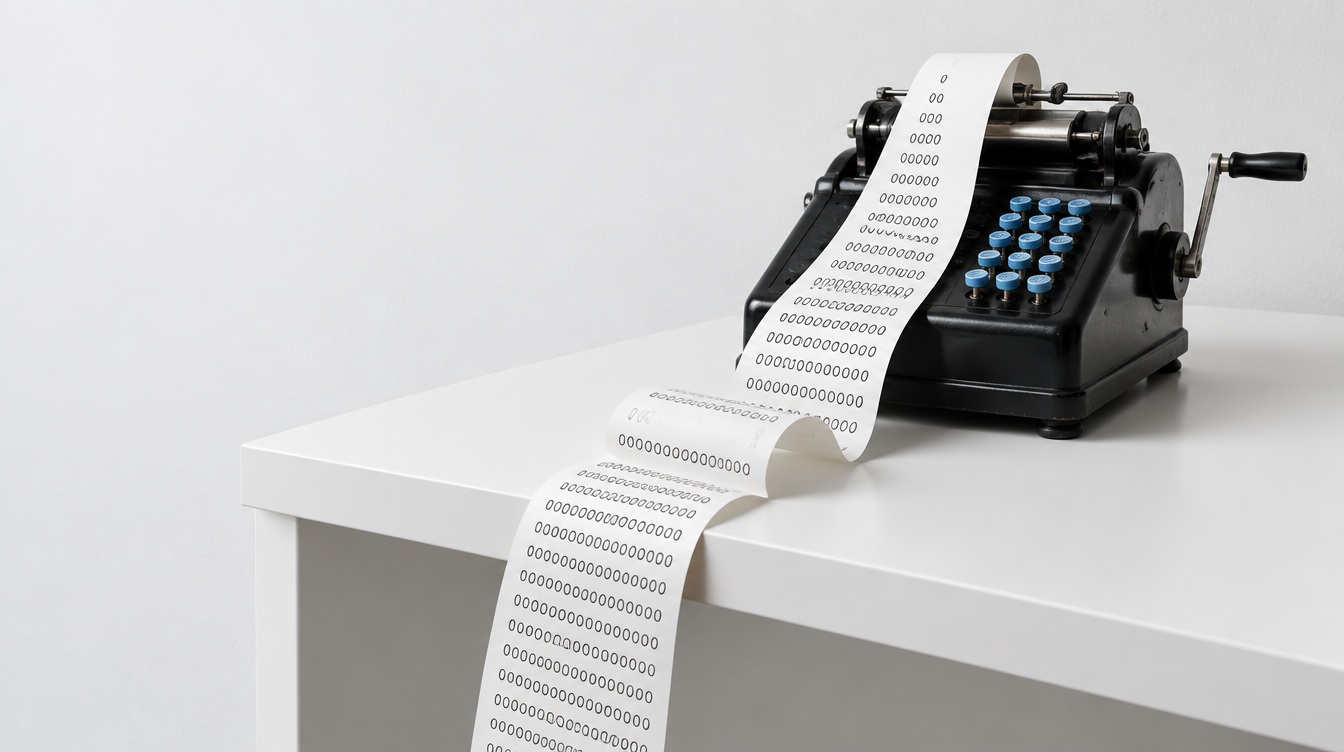
Monetary History · September 30, 2026 · 8 min read
Yugoslavia’s October Dinar, 1993: Six Zeros Off, Ten Banknotes, 92 Days
On October 1, 1993, Yugoslavia exchanged a million dinars for one. Here is every banknote the new October dinar produced, with Pick numbers and issue dates, and how the series climbed from 5,000 to 500 billion before nine more zeros came off on New Year’s Day.
What was the Yugoslav October dinar of 1993?
On Friday, October 1, 1993, the Federal Republic of Yugoslavia, then made up of Serbia and Montenegro, redenominated its currency for the fourth time. Every 1,000,000 reformed dinars (YUR) became one new dinar, known in currency tables as the 1993 dinar and to collectors as the October dinar (ISO code YUO). Prices, wages, savings and exchange rates were all divided by a million on the same day.
The National Bank’s own exchange-rate records show the change in a single line. On Thursday, September 30, the official price of one Deutsche Mark was 283,494,398 dinara. On Friday it was 302.40.
Why did Yugoslavia remove six zeros in 1993?
The reformed dinar was only fifteen months old. It had replaced the convertible dinar on July 1, 1992, at ten to one, as United Nations sanctions took hold and hyperinflation deepened. Its banknotes record the acceleration: a 100,000 dinara note in April 1993, 1,000,000 in June, 1,000,000,000 on August 30 and 10,000,000,000 dinara, Pick 127, on September 21. Ten days later, that 10 billion note was the equivalent of 10,000 new dinars.
The old paper did not all vanish on October 1. According to the National Bank of Yugoslavia’s catalog, the reformed notes of 1,000,000 dinara and below were withdrawn by that day, but the 5,000,000 through 10,000,000,000 dinara notes stayed legal tender until December 1, 1993, counting as 5 to 10,000 October dinars.
1993 Yugoslavia banknotes list: the complete October dinar series
Ten denominations were issued for the October dinar, all dated 1993 and all printed in Belgrade. Here they are in order of issue:
| Denomination | Pick | Issued | Portrait |
|---|---|---|---|
| 5,000 dinara | 128 | Oct 1, 1993 | Nikola Tesla |
| 10,000 dinara | 129 | Oct 1, 1993 | Vuk Stefanović Karadžić |
| 50,000 dinara | 130 | Oct 14, 1993 | Petar II Petrović Njegoš |
| 500,000 dinara | 131 | Oct 30, 1993 | Dositej Obradović |
| 5,000,000 dinara | 132 | Nov 12, 1993 | Karađorđe |
| 50,000,000 dinara | 133 | Nov 23, 1993 | Mihajlo Pupin |
| 500,000,000 dinara | 134 | Dec 2, 1993 | Jovan Cvijić |
| 5,000,000,000 dinara | 135 | Dec 11, 1993 | Đura Jakšić |
| 50,000,000,000 dinara | 136 | Dec 15, 1993 | Miloš Obrenović |
| 500,000,000,000 dinara | 137 | Dec 23, 1993 | Jovan Jovanović Zmaj |
Issue dates: Tomić and Cvijan, Novčanice Jugoslavije 1918–1997, National Bank of Yugoslavia, 1997. Pick numbers: Standard Catalog of World Paper Money, via Numista.
The sequence looks unusual because it was set by inflation, not by design. There is no 1,000,000 or 100,000,000 dinara note in the series, and after the 50,000, every new note was exactly ten times the one before it. The 1,000,000,000 and 10,000,000,000 dinara notes often sold alongside these belong to the earlier reformed dinar, not to the October series.
How fast did the October dinar lose its zeros again?
The gaps between new top denominations shrank from about two weeks in October to between four and nine days in December. The largest note went from 10,000 dinara to 500,000,000,000 dinara in 83 days, seven more zeros. On December 15, 75 days after the reform, the 50 billion note passed the old 10 billion ceiling that the reform had retired, in a unit a million times larger. All six zeros were back, and more were coming.
The exchange rate explains the pace. At the National Bank’s official rate, one Deutsche Mark cost 302.40 October dinars on October 1 and 1,028,727,207,263 on December 31, a rise of about 3.4 billion times in 92 days. That is a little more than nine zeros, which is exactly how many came off next.
In 92 days, the official price of a Deutsche Mark went from 302 October dinars to more than a trillion. On New Year’s Day, nine zeros came off.
October 1 has a second six-zero anniversary. Twenty-eight years after Yugoslavia, Venezuela removed six zeros on the same date in 2021, exchanging a million bolívares soberanos for one bolívar digital. That shared anniversary is why we call October 1 Six Zeros Day.
What is the 500,000,000,000 dinara note?
The 500,000,000,000 dinara note, Pick 137, issued on December 23, 1993, is the highest denomination in the history of Yugoslav currency. It carries a portrait of the poet Jovan Jovanović Zmaj on the front and the National Library of Serbia on the back, and measures 151 by 72 millimeters. Our complete guide to the 500 billion dinara, Pick 137 covers it in depth.
Its first eight days tell the story. At the National Bank’s official dollar rate, 500 billion dinara was worth about US$9.49 on December 23 and about 28 cents on December 31. The market rate the bank also recorded shows the same fall in Deutsche Marks: roughly five marks on the 23rd, a tenth of a mark on the 31st.
The note also outlived its currency. The National Bank of Yugoslavia’s catalog lists the 5,000 through 500,000,000 dinara notes as withdrawn on January 1, 1994, but the three largest, 5 billion, 50 billion and 500 billion, were not withdrawn until July 22, 1994. At the new year’s ratio they counted as 5, 50 and 500 of the new dinars.
What happened to the Yugoslav dinar in January 1994?
On Saturday, January 1, 1994, Yugoslavia redenominated again, this time at 1,000,000,000 to 1. The new unit, the 1994 dinar (ISO code YUG, often called the January dinar), was the shortest-lived of them all. Its notes, from 10 to 10,000,000 dinara, entered circulation between December 29, 1993 and January 14, 1994. The last was a 10,000,000 dinara note that reused the 1993 Ivo Andrić design, overprinted with the new year. The official Deutsche Mark rate went from 4,115 dinara on January 1 to 13,373,454 on January 22.
On Monday, January 24, 1994, the novi dinar (new dinar, ISO code YUM) was introduced at par with the Deutsche Mark, one to one, with notes of 1, 5 and 10 novih dinara. The Christian Science Monitor reported that it was nicknamed the “super dinar” and was sold for hard currency only at state banks. The January dinar notes were withdrawn on July 22, 1994, the same day as the last three October notes.
Economists Steve Hanke and Nicholas Krus date Yugoslavia’s hyperinflation from April 1992 to January 1994 and place its peak in January 1994: 313,000,000 percent for the month, about 64.6 percent a day, with prices doubling every 1.41 days. That is the third-highest monthly rate in their table, which is why Yugoslavia is number three in our list of every hyperinflation in history, ranked. By early March, the Monitor reported, government figures put monthly inflation at 0.6 percent.
Why do October dinar notes matter to collectors?
The October dinar’s whole paper life fits into a single season: ten notes, one year date, 92 days as a unit of account. The portraits run from Nikola Tesla to Jovan Jovanović Zmaj, a gallery of writers, scientists and leaders from Serbian and Montenegrin history. Read in order of issue, the dates are a day-by-day record of the hyperinflation, and of the families who carried these notes through the winter of 1993. That is what gives the series its historical weight.
Frequently Asked Questions
What was the October dinar?
The October dinar (ISO code YUO) was the Yugoslav currency unit from October 1 to December 31, 1993. It replaced the reformed dinar at 1,000,000 to 1 and was itself replaced on January 1, 1994.
What was the exchange ratio on October 1, 1993?
One million reformed dinars became one October dinar. The official price of a Deutsche Mark went from 283,494,398 dinara on September 30 to 302.40 dinara on October 1.
Which banknotes were issued for the October dinar?
Ten notes, all dated 1993: 5,000 and 10,000 dinara (Pick 128 and 129), 50,000 (130), 500,000 (131), 5,000,000 (132), 50,000,000 (133), 500,000,000 (134), 5,000,000,000 (135), 50,000,000,000 (136) and 500,000,000,000 dinara (137). They were issued between October 1 and December 23, 1993.
What is the highest denomination Yugoslav banknote?
The 500,000,000,000 dinara note of 1993, Pick 137, issued December 23, 1993, with a portrait of Jovan Jovanović Zmaj. It is the largest denomination in the history of Yugoslav currency.
How long did the October dinar last?
92 days, from October 1 to December 31, 1993. On January 1, 1994, 1,000,000,000 October dinars became one 1994 dinar.
What was the super dinar?
“Super dinar” was the nickname of the novi dinar (ISO code YUM), introduced on January 24, 1994 and pegged one to one to the Deutsche Mark. It replaced the short-lived 1994 dinar.
How high did Yugoslavia’s inflation go?
According to Steve Hanke and Nicholas Krus, monthly inflation peaked in January 1994 at 313,000,000 percent, about 64.6 percent a day, with prices doubling every 1.41 days. That is the third-highest monthly rate they record.
Sources & Further Reading
- National Bank of Serbia, official dinar exchange rates 1990–2001 and market exchange rates, 1993 and 1994–1995
- Steve H. Hanke and Nicholas Krus, “World Hyperinflations,” Cato Institute Working Paper No. 8, August 2012
- Jonathan S. Landay, “Serbia Puts the Brakes on Hyperinflation, For Now,” The Christian Science Monitor, March 10, 1994
- Banknotes of the Yugoslav dinar (issue and withdrawal dates per Tomić and Cvijan, National Bank of Yugoslavia, 1997), Wikipedia
- Yugoslav dinar, Wikipedia
- Numista catalog entries: P127, P128, P129, P130, P131, P132, P133, P134, P135, P136, P137
- “Venezuela unveils new currency with 6 fewer zeros,” NBC News, October 1, 2021
Hold the history
Yugoslav banknotes from the hyperinflation years
Our Yugoslavia collection, including notes from the 1993 October dinar series.
Browse Yugoslavia notes →Planet Banknote · Family owned · Sarasota, Florida
Explore Popular Articles
Yugoslavia October Dinar 1993: All 10 Notes, Pick 128–137
Monetary History · September 30, 2026 · 8 min read Yugoslavia’s October Dinar, 1993: Six Zeros Off...
Venezuela 1,000,000 Bolívar Note (Pick 114), Explained
Collector’s Guide · September 29, 2026 · 7 min read Venezuela’s 1,000,000 Bolívar Note, Explained:...

Six Zeros Day: Venezuela 2021 & Yugoslavia 1993 Explained
Monetary History · October 1, 2026 · 7 min read Six Zeros Day: Twice on October 1, a Million Becam...

What Is German Notgeld? The Emergency Money Towns Printed for Themselves
Collector's Guide · Germany · 1914–1923 What Is German Notgeld? The Emergency Money Towns Printed f...