




-
Last one

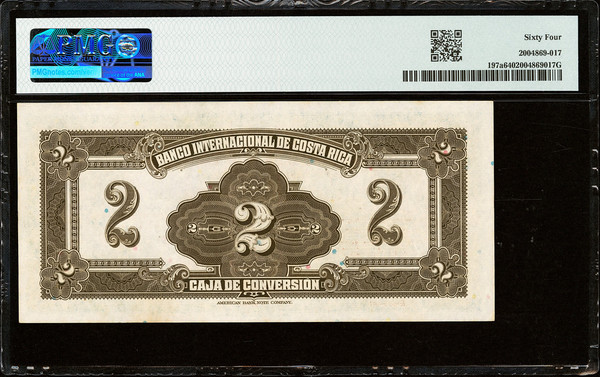
1940 Costa Rica Banco Nacional 2 Colones Pick 197a PMG 64 Choice Unc Overprint
$2,415.001940 Costa Rica Banco Nacional 2 Colones Pick 197a PMG 64 Choice Unc Overprint Rare Overprint Issue | Only 6 graded PMG 64 | Only 5 graded higher Off -


Costa Rica 1899:1906 2 NOTES, Pesos & Colones, Remainder UNC, Beautiful Vibrant Color, RARE
$459.00Introducing the exquisite "Costa Rica 1899;1906, 2 NOTES Collection" - a rare set of two Remainder UNC banknotes, featuring Pesos & Colones. These exceptional pieces of history showcase vibrant... -


Costa Rica 1 Colon 1910 Pick 143s Specimen PMG Gem Unc 66 EPQ Finest Known, Rare
$1,685.00A spectacular and seldom-offered Costa Rica 1 Colon Specimen, dated 1910 and cataloged as Pick 143s, this note represents an important survivor from the classic early 20th-century paper money of the... -


1966-68 Costa Rica 100 Colones PMG 66, P-234s, Specimen
$675.00Introducing the exquisite 1966-68 Costa Rica 100 Colones banknote, graded PMG 66, P-234s Specimen. This exceptional piece of history offers a rare glimpse into Costa Rica's vibrant past. The banknote... -

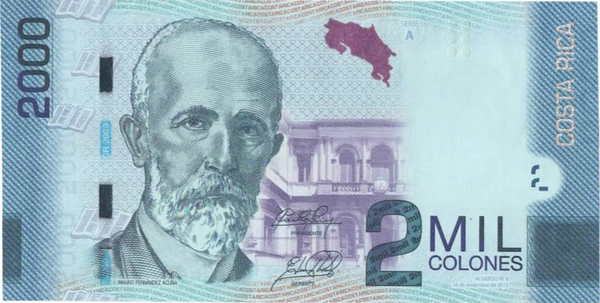
2015 Costa Rica 2000 Colones Prefix A Serial Number Set of 10 UNC Notes Crisp
$139.002015 Costa Rica 2000 Colones Prefix A Serial Number Set of 10 UNC Notes Crisp Offered here is a consecutive set of 10 Crisp Uncirculated banknotes from Costa Rica, each with a face value of
Description
Costa Rica Banco Anglo Costarricense 1 Colón & 20 Colones Unsigned Remainder Pair — 1917 Law & ND, Pick S121r & S124r
We offer this two-note pairing from Costa Rica’s Banco Anglo Costarricense, comprising a 1 colón, Law of June 23, 1917, Pick S121r, and a 20 colones, ND (19__), Pick S124r. Both are Series A unsigned remainders, with their presidential and administrator signature spaces left blank. These represent printed banknote stock that was not completed for normal issue, rather than signed circulation examples. This offering includes one 1-colón note and one 20-colones note; the 5- and 10-colones denominations are not included.
The 1-colón note carries the American Bank Note Company imprint. Its June 23, 1917 inscription identifies the law referenced on the design, not a separately completed issue date. Black engraving, multicolored ornamental panels, and red serial numbering surround the central portrait. The green reverse features a seated Mercury within an elaborate arrangement of denomination panels and decorative borders, offering a classical counterpart to the historical imagery of the 20-colones note.
The 20-colones note carries the Bradbury, Wilkinson & Co., London imprint and retains an unfinished January 1 date line ending in “19.” We therefore describe it as ND (19__), without assigning a completed calendar year. Its face balances an oval portrait at left with a large ornamental denomination panel against amber-orange and pale gray printing. The copper-brown reverse frames San José’s National Monument, commemorating the 1856–1857 campaign against the filibusters and connecting the design with Costa Rica’s defense of national sovereignty.
Founded in 1863 by British and Costa Rican partners, Banco Anglo Costarricense belonged to the country’s private note-issuing banking tradition, before currency issuance became centralized. The pairing represents two distinct security printers working for the same Costa Rican institution.
Costa Rica introduced the colón within a gold-standard framework in 1896. Both designs retain gold-payment wording, although gold convertibility was suspended in 1914. On these unsigned remainders, that wording records the intended payment terms of the designs rather than demonstrating that the individual notes were completed and issued.
Together, these remainders offer an engaging comparison for collectors of Costa Rican banknotes, Latin American private-bank paper, and unissued currency. American Bank Note Company’s green allegorical reverse and Bradbury Wilkinson’s copper-brown monument scene give the pair a distinctive visual relationship, while their blank signature fields preserve an important distinction between completed circulating notes and unfinished banknote stock.