
Zimbabwe Agro Cheques Explained (P-61 to P-64)
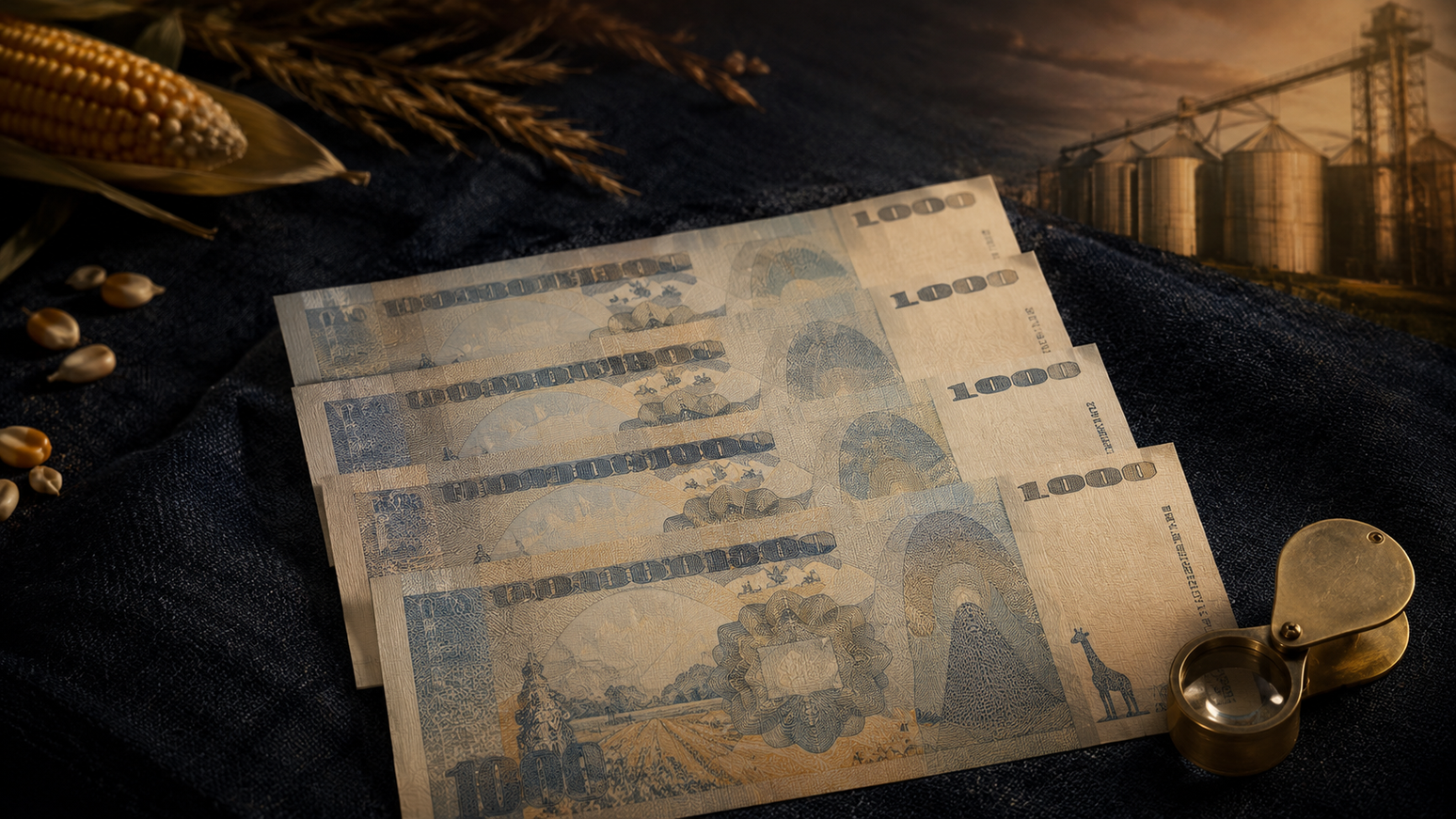
Numismatic Reference · Zimbabwe Hyperinflation · Updated August 2026
Zimbabwe Agro Cheques Explained: The Billion-Dollar "Harvest Money" of 2008
Before the famous 100 Trillion note, there were the Agro Cheques — four billion-denominated bearer instruments the Reserve Bank of Zimbabwe rushed out in mid-2008 as hyperinflation outran the printing press. Here's what they are, why they aren't technically banknotes, and why the complete P-61 through P-64 set has become a cornerstone of hyperinflation collecting.
Quick answer: Zimbabwe Agro Cheques (officially "Special Agro-Cheques") are billion-dollar bearer instruments issued by the Reserve Bank of Zimbabwe in 2008, at the height of the country's hyperinflation. Four denominations exist — $5 billion (P-61), $25 billion (P-62), $50 billion (P-63), and $100 billion (P-64). The first three appeared in May 2008; the $100 billion followed in July 2008, when it was worth roughly one U.S. dollar on the parallel market. All carried a printed expiry date of December 31, 2008, and all are now demonetized collectibles.
What is a Zimbabwe Agro Cheque?
An Agro Cheque is not, strictly speaking, a banknote. By 2003, the Reserve Bank of Zimbabwe had stopped issuing conventional banknotes and switched to "bearer cheques" — instruments that promised to pay the bearer on demand and carried printed expiry dates, a legal fiction that let the central bank issue circulating money without calling it currency. The Special Agro-Cheques of 2008 were the final and largest-denominated evolution of that system.
The "agro" name came from their stated purpose: they were introduced during the agricultural marketing season, pitched as a way for farmers to receive payment for tobacco, maize, and other crops without hauling literal bricks of smaller bearer cheques. In practice, they circulated as everyday money — because by mid-2008, everyday money in Zimbabwe meant billions.
What denominations of Agro Cheques exist?
| Denomination | Pick # | Released | Printed Expiry |
|---|---|---|---|
| $5,000,000,000 | P-61 | May 2008 | 31 December 2008 |
| $25,000,000,000 | P-62 | May 2008 | 31 December 2008 |
| $50,000,000,000 | P-63 | May 2008 | 31 December 2008 |
| $100,000,000,000 | P-64 | July 2008 | 31 December 2008 |
All four share the bearer-cheque design language of the era: the Chiremba Balancing Rocks of Epworth on the face — the same motif Zimbabweans had seen on their money since the 1980s — with agricultural vignettes of grain silos, maize, and cattle carrying the "agro" theme. The 2008 issue date and the expiry date are printed directly on each piece.
What could a $100 billion Agro Cheque actually buy in 2008?
Almost nothing — and that is precisely the point of collecting them. When the $100 billion Agro Cheque entered circulation in July 2008, it was worth roughly one U.S. dollar at parallel-market rates, and contemporary wire reports noted it could not cover a loaf of bread, which was already priced well above its face value and climbing daily. Zimbabwe's official annual inflation rate for July 2008 — the last figure the government published — was 231 million percent. Independent economists later estimated the true peak, in November 2008, at 89.7 sextillion percent, with prices doubling roughly every 24 hours.
A hundred billion dollars that couldn't buy breakfast: the Agro Cheque is hyperinflation made tangible, one wallet-sized artifact at a time.
Weeks after the $100 billion appeared, the Reserve Bank redenominated the currency on August 1, 2008, slashing ten zeros to create the third Zimbabwe dollar. The Agro Cheques were permitted to circulate alongside the new notes until their printed expiry at the end of 2008 — after which the printing race resumed, culminating in the trillion-series notes of early 2009, including the famous 100 Trillion.
Agro Cheques vs. the 100 Trillion note: what's the difference?
| Agro Cheques (2008) | 100 Trillion (2008 series, issued 2009) | |
|---|---|---|
| Instrument type | Bearer instrument with printed expiry date | Conventional banknote |
| Currency generation | Second Zimbabwe dollar (ZWN) | Third Zimbabwe dollar (ZWR) |
| Top denomination | $100 billion | $100 trillion |
| Collector profile | The connoisseur's chapter — scarcer as a complete UNC set, tells the mechanism of hyperinflation | The icon — the single most famous hyperinflation note in the world |
Most collectors enter Zimbabwe through the 100 Trillion. The Agro Cheques are where they go next, because the four-piece set captures the exact moment the second dollar collapsed — the "cheque" workaround, the expiry dates, the ten-zero reset that followed. A 100 Trillion says how big it got; the Agro Cheque set shows how it happened.
Are Zimbabwe Agro Cheques rare or valuable?
Individually, circulated Agro Cheques remain affordable entry points into hyperinflation collecting. The premium sits in condition and completeness: crisp uncirculated examples — especially the $100 billion P-64, which had the shortest issue window before redenomination — and matched four-piece UNC sets command meaningfully more than the sum of worn singles. Because these pieces circulated hard during a desperate period, true UNC survivors are a minority of what's on the market. Third-party grading by PMG or PCGS Banknote adds a layer of authentication that matters here, as the series' fame has attracted reproductions; buy from established dealers and treat bargain-priced "UNC bricks" from unfamiliar sellers with caution.
All Agro Cheques are fully demonetized — they have carried no monetary value since the Zimbabwe dollar was abandoned in 2009 — which makes them pure historical artifacts, legal to own and trade worldwide. New collectors should start with our beginner's guide to world banknote collecting, and anyone buying raw examples should review how to store and preserve banknotes — the paper stock of the 2008 issues is unforgiving of humidity and handling.
How Zimbabwe's hyperinflation compares to history
Zimbabwe 2008 is one of the two hyperinflations every collector eventually studies — the other being Weimar Germany, where a loaf of bread reached roughly 428 billion marks by late 1923 and towns printed their own emergency money to keep commerce alive. The parallels are striking: both produced expiry-dated stopgap instruments, both ended with a currency reset, and both left behind some of the most collected paper in numismatics. For the German side of that story, see our companion reference on Weimar Notgeld. Zimbabwe's episode ranks among the most severe ever recorded — second only to Hungary's 1946 pengő collapse — and the Agro Cheques sit at its exact inflection point.
Frequently Asked Questions
What is a Zimbabwe Agro Cheque?
A "Special Agro-Cheque" is a billion-denominated bearer instrument issued by the Reserve Bank of Zimbabwe in 2008 during hyperinflation. Four denominations exist: $5, $25, $50, and $100 billion (Pick 61–64). They functioned as everyday money but carried printed expiry dates rather than being formal banknotes.
Why are they called Agro Cheques?
They were introduced during Zimbabwe's agricultural marketing season, presented as a convenience for farmers being paid for crops — hence "agro." In reality they circulated as general-purpose currency.
Are Agro Cheques real currency today?
No. They expired on December 31, 2008, and the entire Zimbabwe dollar system was abandoned in 2009. They are demonetized historical collectibles with no exchange value.
What are the Pick numbers for the Agro Cheques?
P-61 ($5 billion), P-62 ($25 billion), P-63 ($50 billion), and P-64 ($100 billion), per the Standard Catalog of World Paper Money.
How much is a 100 billion Zimbabwe Agro Cheque worth?
Value depends on condition. Circulated examples are affordable collector pieces; crisp uncirculated examples and complete four-piece UNC sets carry a meaningful premium, and certified high-grade examples more still. Prices have trended upward as hyperinflation collecting has grown.
Are fake Agro Cheques a problem?
Reproductions exist, as with all famous Zimbabwe issues. Buy from established numismatic dealers, and consider PMG- or PCGS-certified examples for high-grade pieces.
Did the Agro Cheques come before or after the 100 Trillion note?
Before. Agro Cheques (mid-2008) were the last issues of the second Zimbabwe dollar. The 100 Trillion arrived in January 2009 under the third dollar, after the August 2008 redenomination removed ten zeros.
Sources
Historical framing draws on the Smithsonian National Museum of American History's hyperinflation collection, contemporary 2008 wire-service reporting on the Reserve Bank of Zimbabwe's issues, and the Standard Catalog of World Paper Money (Pick) numbering. Peak-inflation estimates follow the widely cited Hanke-Kwok research on Zimbabwe's 2008 hyperinflation.
Own the Complete Set
All four 2008 Special Agro-Cheques — $5B, $25B, $50B, and $100B (P-61 through P-64) — in crisp uncirculated condition, as a matched four-piece set.
SHOP THE AGRO CHEQUE SETExplore Popular Articles

Consecutive Serial Numbers: How to Buy Banknote Lots
Collector's Guide · Buying Guide · Updated October 7, 2026 Consecutive Serial Numbers, Explained: H...

Venezuela 200 Bolívares = 200 Million Old Bolívares
Collector's Guide · World Banknotes · Updated October 7, 2026 Venezuela's 200 Bolívares Note Equals...
Yugoslavia October Dinar 1993: All 10 Notes, Pick 128–137
Monetary History · September 30, 2026 · 8 min read Yugoslavia’s October Dinar, 1993: Six Zeros Off...

Venezuela 1,000,000 Bolívar Note (Pick 114), Explained
Collector’s Guide · September 29, 2026 · 7 min read Venezuela’s 1,000,000 Bolívar Note, Explained:...