
Zimbabwe BiG5 ZiG Banknotes 2026: Complete Collector's Guide
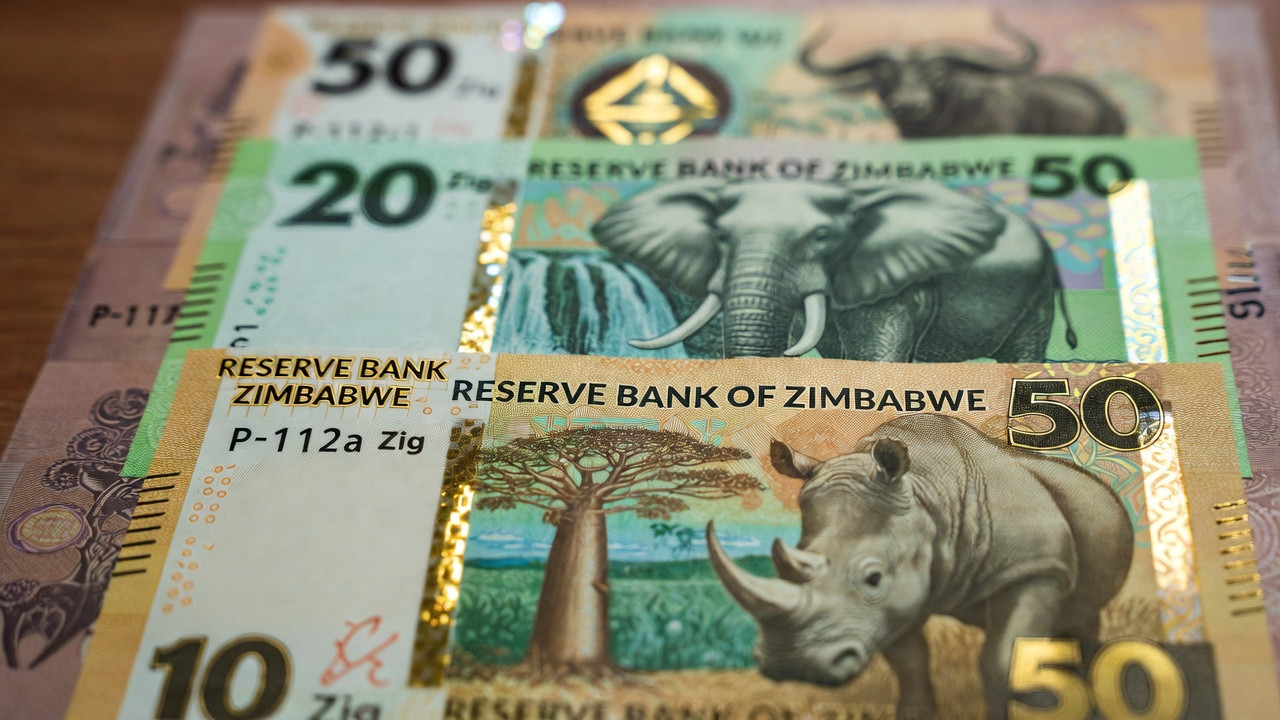
Zimbabwe’s New “BiG5 ZiG” Banknotes: The 2026 Release and What It Means for Collectors
Inside Zimbabwe’s April 7, 2026 Currency Relaunch — Big Five Animals, Gold Backing, Security Features, and Why the Original 2024 Series Just Became a Key Collectible
On April 7, 2026, the Reserve Bank of Zimbabwe rolled out an entirely new series of Zimbabwe Gold (ZiG) banknotes across the country. Branded the “BiG5 ZiG” series after its central design theme — Africa’s five iconic wild animals — the new notes replace a short-lived first series that entered circulation just two years earlier and quickly became infamous for fading, tearing, and disappearing from hands before they could be spent.
For collectors of world banknotes, this is one of the most significant African currency events of the decade. A national currency has been visually and physically reinvented mid-cycle, a first series has been effectively closed at only two issued denominations, and a new family of gold-backed notes has entered the world stage featuring the Big Five animals on a substrate designed for international security standards. This guide covers everything that matters: the April 2026 rollout itself, the history behind it, the full design and security breakdown of each denomination, the reality of the gold backing, and what the original 2024 P-110a and P-111a notes mean now that a second series has been issued.
The April 7, 2026 Rollout: What Actually Happened
Reserve Bank of Zimbabwe Governor Dr. John Mushayavanhu formally launched the upgraded BiG5 ZiG banknote series on April 7, 2026, with commercial banks, ATMs, and HomeLink kiosks nationwide beginning distribution that morning. The rollout had been announced two months earlier in the February 2026 Monetary Policy Statement and was formalized through Statutory Instrument 37 of 2026, which replaces the original Statutory Instrument 60 of 2024 that authorized the first ZiG series.
The phased release started with the ZiG10, ZiG20, and the brand-new ZiG50 denomination. Higher denominations — the ZiG100 (leopard) and ZiG200 (lion) — have been designed and gazetted but will be introduced later, guided by transactional demand and domestic monetary conditions. The ZiG1, ZiG2, and ZiG5 coins first introduced in April 2024 remain in circulation to support small-value transactions.
The original 2024 ZiG banknotes have not been demonetized. Governor Mushayavanhu confirmed that the old series will “co-circulate indefinitely” with the new BiG5 series and will be “naturally and automatically phased out of circulation once deposited into the banking system.” This means the first-series P-110a (10 ZiG) and P-111a (20 ZiG) notes are being actively pulled from circulation at banks and not reissued — a slow-burn demonetization that will tighten the supply of clean, uncirculated first-series notes over the coming months and years.
Weekly cash withdrawal limits under the new rollout are set at ZiG10,000 for individuals and ZiG100,000 for corporates. As of March 31, 2026, the RBZ reports that the ZiG currency is backed by approximately US$1.3 billion in foreign currency and gold reserves — nearly twice the total value of ZiG deposits in the domestic banking system.
How We Got Here: The 2024 ZiG and Why It Needed Replacing
To understand why a new series of banknotes was needed only two years after the first, it helps to trace the ZiG’s short but eventful history.
The Zimbabwean Gold (ZiG) was announced on April 5, 2024, as Zimbabwe’s sixth attempt since 2008 to create a stable domestic currency. The preceding currency, the fourth Zimbabwean dollar (RTGS dollar / ZWL), had collapsed to an official exchange rate of over 30,000 Zimdollars per U.S. dollar by April 2024, with the black-market rate pushing past 40,000. Annual inflation had hit 55.3% in March 2024. The ZiG officially began trading on April 8, 2024, at a rate of 13.56 ZiG per U.S. dollar and was initially claimed to be backed by approximately US$900 million in gold, foreign currency, and precious metals.
The original plan called for eight banknote denominations from 1 ZiG to 200 ZiG. What actually happened is a cautionary tale in modern currency design:
Of the eight denominations originally announced, only two banknotes actually circulated: the 10 ZiG (Pick #110a) and the 20 ZiG (Pick #111a). The 1, 2, and 5 ZiG denominations were cancelled as notes and reissued as coins. The 50, 100, and 200 ZiG notes were postponed indefinitely on May 30, 2024 — just weeks after the currency’s launch — due to concerns at the Reserve Bank that releasing higher denominations so early would fuel inflation. The 2024 notes featured the Domboremari (balancing rocks of Matobo), a QR code linking to an RBZ verification string, and a reverse design depicting liquid gold being moulded onto a stack of 12 gold bars. The notes were almost identical in design, differentiated only by denomination and color.
Two problems quickly emerged. First, the ZiG lost roughly half of its official value within its first six months of trading, and roughly three-quarters of its value on the parallel market — a reminder that gold backing alone does not guarantee price stability when the broader monetary environment is strained. Second, and equally damaging to public confidence, the banknotes themselves proved to be of poor physical quality. Banks and retailers reported that the notes faded rapidly, tore easily under normal handling, and showed wear far faster than banknotes from surrounding African economies. By late 2024, the RBZ was under significant pressure from the banking sector to produce higher-quality, more durable notes.
By early 2026, the macroeconomic backdrop had improved substantially. Official inflation fell to 4.1% in January 2026 and 3.8% in February 2026, the lowest levels Zimbabwe had recorded in nearly three decades. Foreign currency and gold reserves backing the ZiG had climbed from the roughly US$276 million held at launch to US$1.2 billion by the end of 2025. This stronger reserve position gave the RBZ confidence to expand the ZiG denomination range, complete the original series as a proper family of notes (including the long-delayed 50, 100, and 200), and replace the failed 2024 notes with a more durable, more secure, and visually reimagined set. Hence the BiG5 ZiG series.
The “Big Five” Theme: Animal Assignments and Cultural Significance
The “Big Five” — the African buffalo, elephant, rhinoceros, leopard, and lion — are a cornerstone of Zimbabwe’s identity as a wildlife nation. All five species are resident in Zimbabwe’s national parks, most famously Hwange, Mana Pools, and Gonarezhou. By placing one Big Five animal on each denomination, the RBZ ties its newest currency explicitly to national heritage, conservation, and tourism — while also providing a clean, memorable differentiation between denominations that the 2024 series lacked.
Here is the complete denomination assignment gazetted under Statutory Instrument 37 of 2026:
| Denomination | Front (Obverse) | Back (Reverse) | Status (April 2026) |
|---|---|---|---|
| ZiG 10 | African Buffalo | Matopo Hills landmark | In circulation |
| ZiG 20 | African Elephant | Parliament of Zimbabwe | In circulation |
| ZiG 50 | Rhinoceros | National landmark (per gazette) | In circulation (first issue) |
| ZiG 100 | Leopard (color-shift, gold to green) | Per SI 37 of 2026 | Gazetted; release TBD |
| ZiG 200 | Lion | Per SI 37 of 2026 | Gazetted; release TBD |
This is the first time Zimbabwe’s banknotes have featured a dedicated wildlife series on every denomination. Previous series have depicted the Zimbabwe Bird (the national emblem), the balancing rocks of Matobo, and various national landmarks, but the systematic Big Five theme is new. It directly parallels the approach used by South Africa, whose rand banknotes have featured the Big Five for decades — a design lineage that is no accident given how intertwined the South African rand is with the Zimbabwean economy.
Design and Security Features: A Detailed Breakdown
One of the central reasons for the redesign was security. The 2024 notes carried basic features — a QR code and a standard security thread — but lacked the modern anti-counterfeiting arsenal found on banknotes issued by most African central banks. The BiG5 ZiG series, as gazetted under Statutory Instrument 37 of 2026, brings Zimbabwe’s currency up to international security standards for the first time since the pre-hyperinflation era.
Every note in the BiG5 ZiG series shares a consistent set of core security features:
- Intaglio printing of the RBZ logo (three balancing rocks) and the Big Five animal, producing a raised, tactile surface that cannot be reproduced by photocopier or inkjet.
- Visually impaired recognition feature on the left-hand side of each note — a tactile element that allows the blind and partially sighted to identify denominations by touch.
- Embedded magnetic security thread inscribed with the denomination (“ZIG10,” “ZIG20,” “ZIG50,” etc.).
- Peak Dynamic image of the Zimbabwe Bird — an optically variable device that shifts appearance when the note is tilted.
- Latent image of the word “ZiG” revealed when the note is viewed at an angle.
- Watermark of the Zimbabwe Bird with a highlighted numeral denomination.
- See-through register with the Zimbabwe Bird perfectly aligned front-to-back.
- Denomination numeral registered with a star, using a precision printing technique that is extremely difficult to counterfeit.
In addition to these common features, the higher denominations introduce additional security layers designed to deter counterfeiting of the most valuable notes:
- ZiG 100 (Leopard): Adds a windowed Rolling Star magnetic security thread inscribed “ZIG100,” and a color-shift effect on the leopard’s head that changes from gold to green as the note is tilted.
- ZiG 200 (Lion): Features a color-shifting gold bars image on the lower right side — a deliberate visual nod to the “gold-backed” identity of the ZiG currency.
The notes are also printed on a more durable substrate than the 2024 series, specifically engineered to address the fading and tearing that plagued the first issue. The RBZ has not disclosed the printer or substrate supplier publicly, but the specification language in SI 37 of 2026 closely mirrors the feature sets used by several African central banks that source from major European security printers.
The Gold Backing: What It Actually Means
The word “Gold” sitting at the center of the currency’s name is not decorative. The ZiG is structured as a composite reserve currency: every unit in circulation is meant to be backed by a basket of hard assets including physical gold, foreign currency reserves, and other precious metals held by the Reserve Bank of Zimbabwe. This is a genuine departure from the model of the preceding Zimbabwean dollars, which were backed by government fiat alone and lost value in direct proportion to the speed of the printing press.
The practical numbers have changed significantly since launch:
| Date | Reserve Backing | ZiG / USD Exchange Rate |
|---|---|---|
| April 2024 (launch) | ~US$276M (rising to ~US$900M claimed) | 13.56 ZiG / USD |
| October 2024 | Post-devaluation | ~27 ZiG / USD (official) |
| End of 2025 | US$1.2 billion | Relatively stable |
| March 31, 2026 | US$1.3 billion (2× bank deposits) | Stable; inflation at 3.8% |
The trajectory is meaningful. The ZiG still trades at a substantial premium to its launch exchange rate, and the U.S. dollar remains dominant in day-to-day Zimbabwean commerce — roughly 70% of transactions by the latest estimates. Whether the BiG5 rollout, combined with tighter monetary discipline and stronger reserves, can meaningfully shift that balance is the open question of the next few years. For a collector, however, these macroeconomic questions are interesting context rather than determinants of collectible value. What matters for the collectible market is that this currency has a clearly documented, gazetted, and actively produced two-series history, with a defined first series that has already been effectively closed.
Why Collectors Are Paying Attention
The April 2026 release changes the collector calculus for ZiG notes in several specific ways that serious numismatists are already acting on.
The 2024 P-110a and P-111a notes are now a closed first series. Only two denominations of the original 2024 ZiG banknotes ever reached circulation: the 10 ZiG (P-110a) and the 20 ZiG (P-111a). With the BiG5 series now issued and the original notes being pulled at banks without reissue, the entire first-series Pick catalog for the ZiG currency consists of precisely two banknote entries. No additional Pick numbers for 1, 2, 5, 50, 100, or 200 ZiG notes will ever be added to the 2024 series because those denominations were either cancelled as notes or postponed until the 2026 redesign.
Uncirculated first-series examples are supply-constrained by the very problem that caused the redesign. The same fading and tearing issues that prompted the new series mean that high-grade surviving examples of the 2024 P-110a and P-111a are rarer than their age alone would suggest. Banknotes that entered circulation and were handled are disproportionately likely to have degraded below Choice Uncirculated levels. Top-pop PMG examples — 67 EPQ and 68 EPQ — are already scarce.
PMG certification provides authentication that the note is both genuine and physically preserved. For a currency whose physical durability is part of its historical story, third-party grading is especially valuable. A PMG 66 or 67 EPQ designation on a P-110a or P-111a certifies not just authenticity but that the note has been preserved at a level most circulated specimens never achieved.
Planet Banknote is one of the few dealers worldwide to have PMG-graded 2024 ZiG notes certified with a dedicated Planet Banknote Pedigree label. This means our inventory was hand-selected, submitted directly by us to PMG, and returned with a label that permanently identifies the note as part of the Planet Banknote Pedigree series — a provenance marker that serious collectors look for when building sets of modern world currency.
How to Build a Complete ZiG Collection
Given that the ZiG catalog is still being written, the collecting strategy for this currency is unusually straightforward. Here is the practical roadmap we suggest for collectors building a serious ZiG set in 2026:
- Secure the original 2024 series first. The 10 ZiG (P-110a) and 20 ZiG (P-111a) represent the entire first-series banknote catalog for the ZiG currency. A complete first series is achievable today with two notes. Prioritize PMG-graded examples in 65 EPQ or higher for long-term preservation; raw uncirculated notes are acceptable for budget-conscious collectors but are subject to the same durability concerns that prompted the redesign.
- Acquire BiG5 2026 notes as they release. The new 10, 20, and 50 ZiG denominations are available now through commercial banks in Zimbabwe and will filter into the international collector market over the coming months. Early examples with low serial numbers and prefix letters from the first print runs will carry premiums over time.
- Watch for the ZiG 100 and ZiG 200 releases. The higher denominations are gazetted but not yet in circulation. When they do release, first-day and early-serial examples will be collectible from issuance.
- Consider the 2024 ZiG coins (ZiG1, ZiG2, ZiG5) to complete a cross-format set, since these denominations were originally gazetted as banknotes before being reissued as coins.
- Store properly. The 2024 substrate is known to be less durable than standard banknote paper. Archival semi-rigid sleeves — the kind PBGrade produces specifically for modern world currency — are strongly recommended for ungraded examples.
Frequently Asked Questions About the New ZiG Series
ZiG stands for “Zimbabwe Gold.” The currency’s ISO 4217 code is ZWG. It is the official national currency of Zimbabwe and has been since April 8, 2024, when it replaced the fourth Zimbabwean dollar (RTGS / ZWL).
Yes. The 2024 ZiG banknotes (Pick #110a and #111a) remain legal tender and co-circulate with the new BiG5 ZiG series indefinitely. However, the Reserve Bank of Zimbabwe has announced that old notes deposited at banks will not be reissued, which means they will gradually be pulled from active circulation over time.
The 100 Trillion Dollar note was issued during the 2008–2009 hyperinflation crisis when prices were doubling every 24 hours. The ZiG is an entirely different currency designed for a low-inflation environment. With Zimbabwean inflation currently at 3.8% annually, a 200 ZiG note (roughly US$7.50 at current exchange rates) is appropriate as the highest denomination. The RBZ has deliberately avoided higher denominations to reinforce public perception of currency stability.
Yes. Planet Banknote maintains inventory of both raw uncirculated and PMG-graded 2024 ZiG 10 (P-110a) and ZiG 20 (P-111a) banknotes, including exclusive Planet Banknote Pedigree examples graded PMG 65 EPQ, 66 EPQ, and 67 EPQ. As the original series is pulled from circulation, we expect supply of top-grade examples to tighten.
The official Pick catalog numbers for the 2026 BiG5 ZiG series have not yet been assigned by the Standard Catalog of World Paper Money at time of writing, as the notes have only been in circulation since April 7, 2026. Provisional designations are expected to follow the P-110a / P-111a sequence (likely P-112 through P-116 for the five BiG5 denominations). We will update this guide as official catalog numbers are published.
The Reserve Bank of Zimbabwe reports that the ZiG is backed by a composite reserve basket of physical gold, foreign currency reserves, and other precious metals. As of March 31, 2026, total backing is reported at approximately US$1.3 billion, which the RBZ states is roughly twice the value of ZiG deposits in the domestic banking system. The exact gold-to-foreign-currency ratio within that reserve is not publicly disclosed at a granular level, so “gold-backed” is most accurately described as “composite-hard-asset-backed with gold as a component.”
The Bottom Line for Collectors
The April 7, 2026 rollout of the BiG5 ZiG banknotes is a rare event in modern numismatics: a complete mid-cycle redesign of a national currency, executed publicly, documented in statute, and introduced alongside a clearly defined first series that is no longer being produced. Every collector of modern African currency, every world banknote specialist, and every serious student of currency reform has a reason to pay attention to this issue.
The original 2024 P-110a and P-111a notes, already certified and preserved by Planet Banknote with our exclusive PMG Pedigree labels, are available now — and as the first series is gradually pulled from circulation, the window for acquiring high-grade examples at current prices is not indefinite. The BiG5 series itself will join our inventory in the coming months as the new notes enter the international collector market.
For questions about specific ZiG grades, Planet Banknote Pedigree availability, or building a complete Zimbabwe currency collection that bridges the hyperinflation Trillion Series, the 2024 first series, and the 2026 BiG5 series, we’re happy to help directly.
Explore Popular Articles

Iran's New 5 Million Rial Note 2026: Complete Collector's Guide
Iran’s New 5 Million Rial Note: A Collector’s Tour of Persian Heritage on Currency Inside the 2026...
Zimbabwe BiG5 ZiG Banknotes 2026: Complete Collector's Guide
Zimbabwe’s New “BiG5 ZiG” Banknotes: The 2026 Release and What It Means for Collectors Inside Zimba...
Is It Legal to Buy Iranian Rial in the United States?
The Answer Before You Read Anything Else Yes — It Is Completely Legal to Buy Iranian Rial Banknot...