
The America250 Catalyst
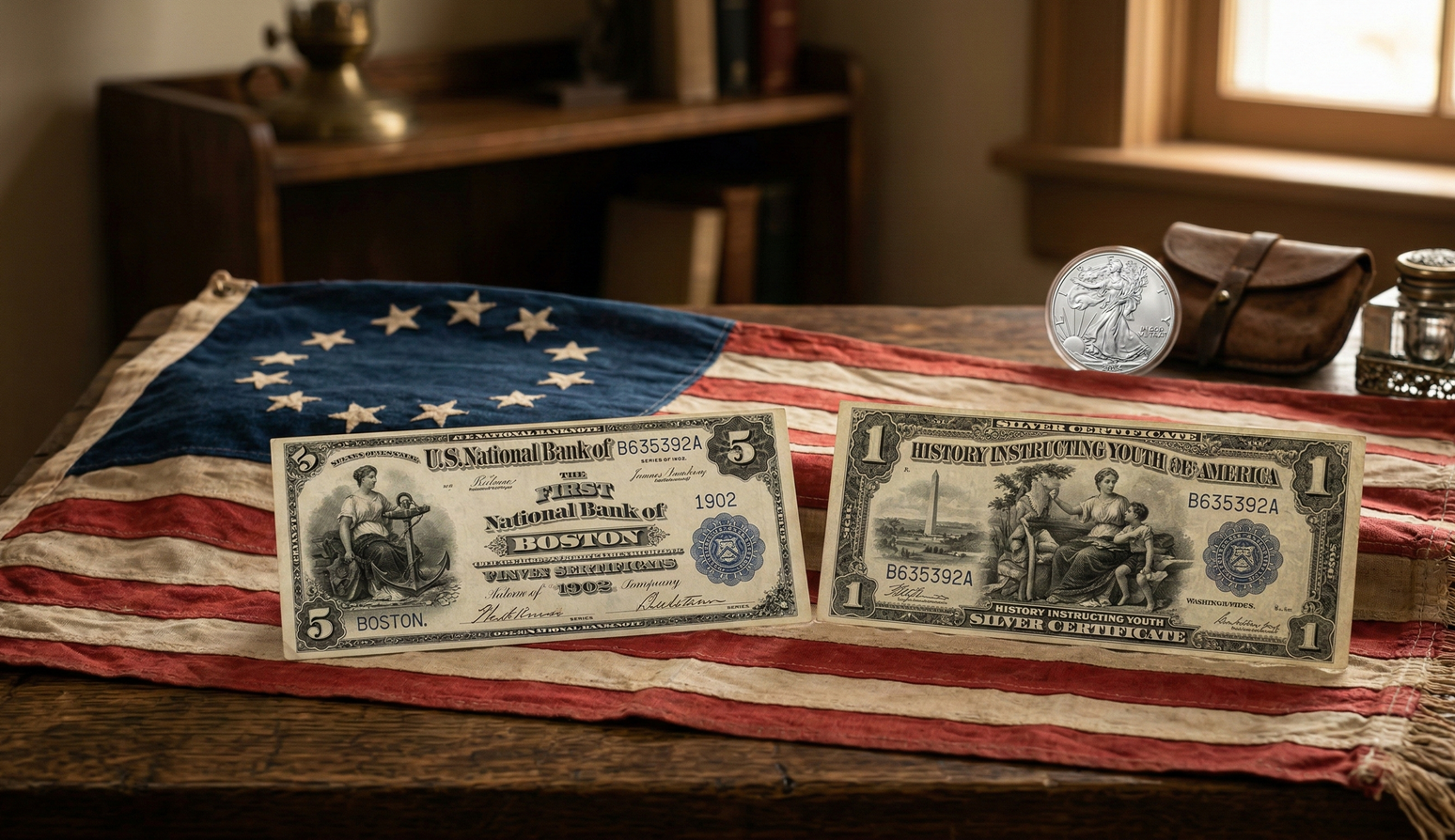
The America250 Catalyst
How the 2026 Semiquincentennial is Repricing U.S. History
The year 2026 represents a critical juncture in the intersection of American cultural heritage and the global financial markets. As the United States approaches the 250th anniversary of its founding—the Semiquincentennial—the convergence of intense patriotic sentiment, a volatile commodity landscape, and the maturation of digital valuation technologies has triggered a structural repricing of U.S. history.
This transformation is most visible in the surge in demand for tangible historical artifacts, specifically in the domains of rare numismatics and vintage paper currency. For professional collectors and institutional investors, the "America250" milestone acts as a psychological and economic catalyst, transforming primary-source artifacts such as Graded U.S. National Banknotes and Silver Certificates from mere collectibles into foundational "trophy assets" that embody the enduring narrative of the American experiment.
The Institutional Framework of the Semiquincentennial
The scale of the 2026 commemoration is unprecedented, driven by a decade of planning that began with the establishment of the U.S. Semiquincentennial Commission in 2016. Under the leadership of the Salute to America 250 Task Force, a full year of festivities commenced on Memorial Day 2025 and is designed to reach its crescendo on July 4, 2026. The federal government’s goal, articulated as "350 by 250," seeks to engage all 350 million Americans in a collective reflection on the nation's past and its future trajectory. This massive engagement effort has significantly expanded the collector base for Americana.
The psychological impact of these initiatives is profound. When the President and the Department of Education collaborate to explore American history in K-12 schools in every state, they are socializing the value of historical literacy. For the collectibles market, this translates into a heightened desire for objects that were physical witnesses to the periods being celebrated. Consequently, the demand for items such as National Banknotes, which feature local signatures and town-specific histories, has moved into a new echelon of cultural and financial importance.
| Event Date | Official Initiative | Secondary Market Impact |
|---|---|---|
| Memorial Day 2025 | Launch of Festive Year | Surge in Military Payment Certificates (MPCs) and "Short Snorter" notes |
| Jan 1, 2026 | America Gives Activation | Demand for non-profit and community-centric medals |
| Feb 26, 2026 | Time Capsule Unveil | Flight to high-grade, encapsulated (graded) artifacts |
| June 14, 2026 | Flag Day - America Waves | Interest in "Educational Series" Silver Certificates and patriotic vignettes |
| July 4, 2026 | Semiquincentennial Finale | Peak demand for Colonial currency and 1776-dated artifacts |
The Origins of Federal Currency: The Civil War Era
To truly participate in the America250 movement, elite collectors are looking to the genesis of federal paper money. Issued to finance the Civil War, the 1861 Demand Notes are the foundational artifacts of the modern U.S. Treasury system.
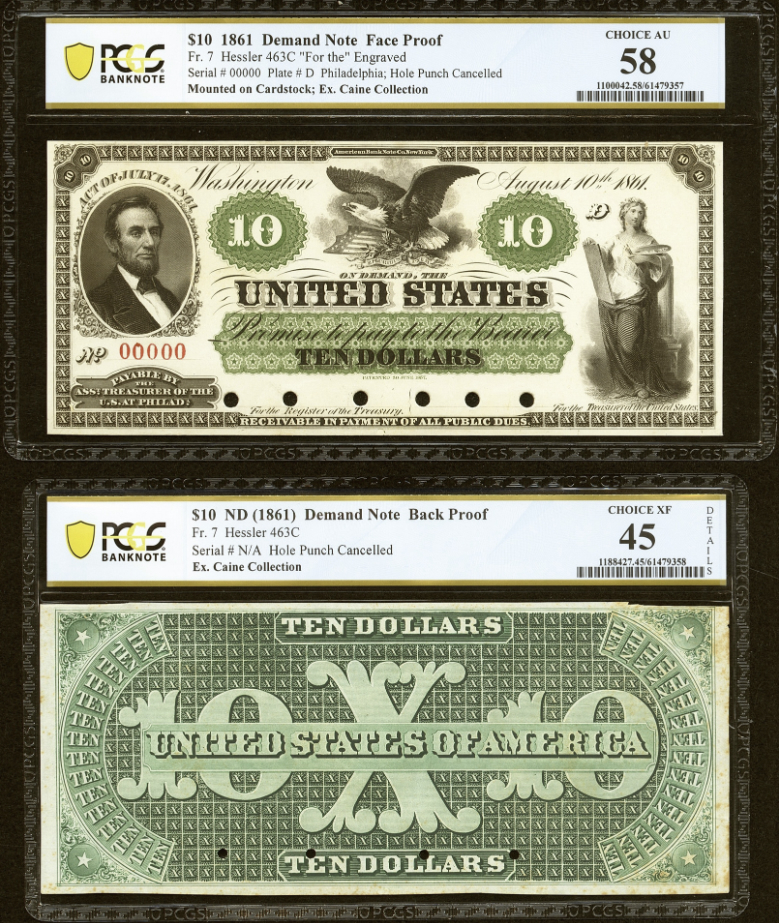
1861 $10 Demand Note Face & Back Proofs
PCGS Choice AU 58 | Under 5 Notes Reported
An impossibly rare glimpse into the creation of the "Greenback." These exquisite face and back proofs are foundational numismatic history, predating the establishment of the National Banking system.
View The 1861 Proofs >The Silver Shock of 2026: Intrinsic Value vs. Numismatic Premium
While the Semiquincentennial provides the cultural impetus for the current market, the skyrocketing price of silver has provided the economic volatility necessary for a major repricing. In early 2026, silver briefly surged above $84 per ounce, marking a 150% increase within a single year. This rise is driven by a structural supply deficit, where industrial demand for silver in solar energy, electric vehicles, and AI data centers has far outstripped newly mined supplies. This high-spot environment has created a complex dynamic for Silver Certificates and other silver-backed currency.
In the numismatic market, a rise in spot price often "eats" the collectible premium. If a coin was valued at $4,000 when gold was $2,000, it may still be near that price even as gold hits $3,800, creating a relative discount in terms of metal-to-collectible value. This phenomenon is especially prevalent in 2026 with 90% silver coinage and Silver Certificates. However, for the discerning collector, this "premium compression" represents a generational "buy-the-dip" moment for numismatic artifacts that are currently undervalued relative to their metal content or historical significance.
Mathematical Analysis of Premium Compression
The relationship between the spot price of precious metals and the collectible premium in 2026 can be modeled by the following formula for the Percentage Premium (Pp):
Where:
Va = Auction price or market valuation of the item.
Wm = Weight of the precious metal in the item (in troy ounces).
Ps = Current spot price of the metal.
Silver Certificates: Promises of Tangible Wealth
The current fascination with Silver Certificates (1878–1964) is a direct result of their role as primary-source documents of America’s complex relationship with silver. Born out of the "Crime of '73," these notes were a response to the gold standard proponents and represented a compromise that allowed for the monetization of silver. In 2026, collectors are increasingly viewing these certificates not just as money, but as "receipts" for a historical era where paper currency was a direct portal to the nation's rich reservoirs of physical silver.
| Tier | Period/Series | 2026 Market Behavior |
|---|---|---|
| Ultra-High-End | 1878-1880 Large Size | Auction-driven; Price-insensitive to spot silver |
| Artistic/Vignette | 1896 "Educational" | Demand surge from new high-net-worth collectors |
| Historic/Emergency | 1934 Hawaii/N. Africa | Rising interest among WWII and geopolitical history buffs |
| Common/Small Size | 1935-1957 series | Traded as "leveraged silver" near melt value |
National Banknotes: The Hometown Currency Movement
Perhaps the most significant development in the 2026 repricing of U.S. history is the resurgence of Graded U.S. National Banknotes. Issued between 1863 and 1935 by more than 12,000 federally chartered banks, these notes were backed by government bonds but featured the prominent name of the issuing local bank and the signatures of local officials. This town-specific branding makes them uniquely attractive to a population seeking to connect the broad national Semiquincentennial celebration to their own local "hometown" history.
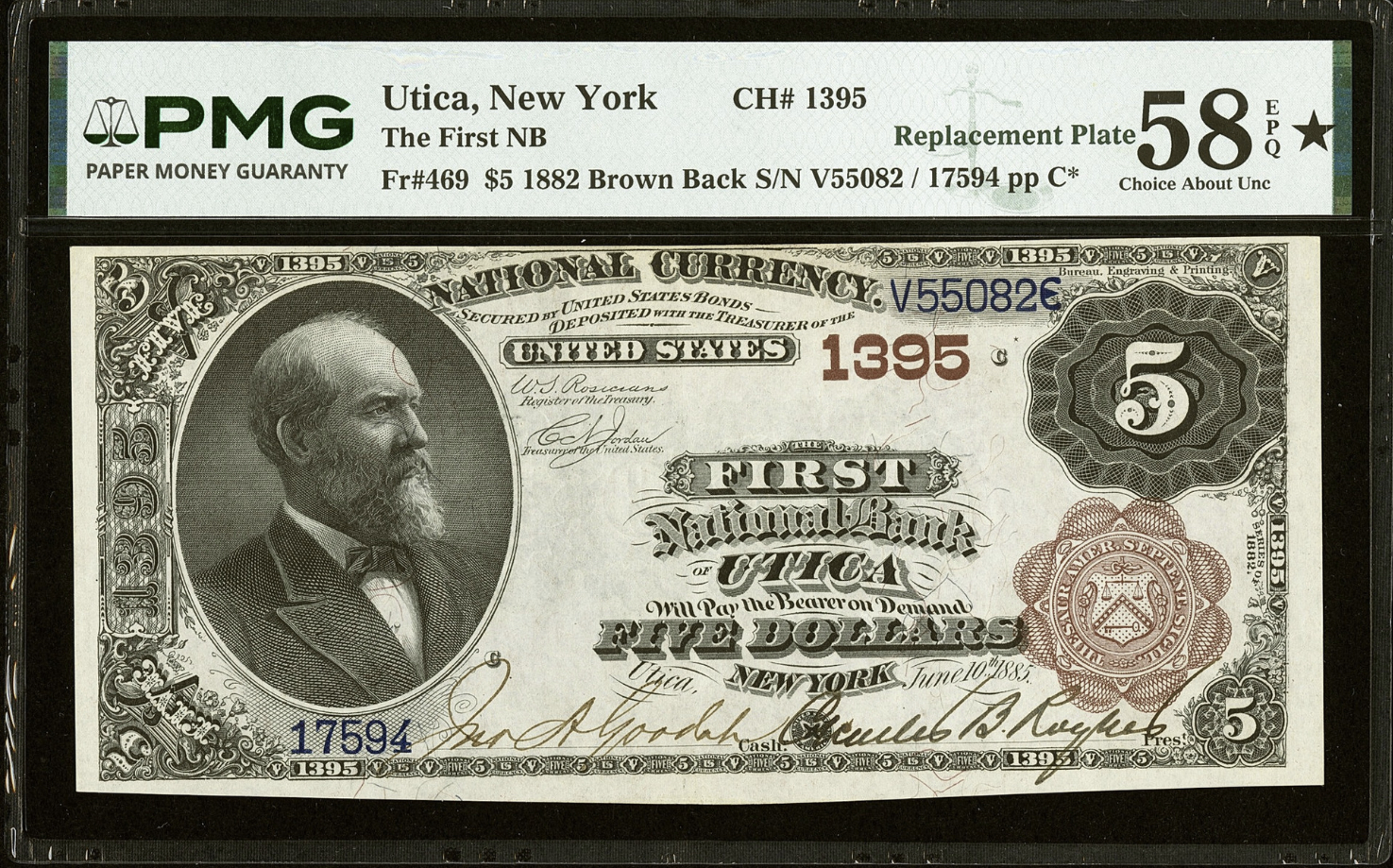
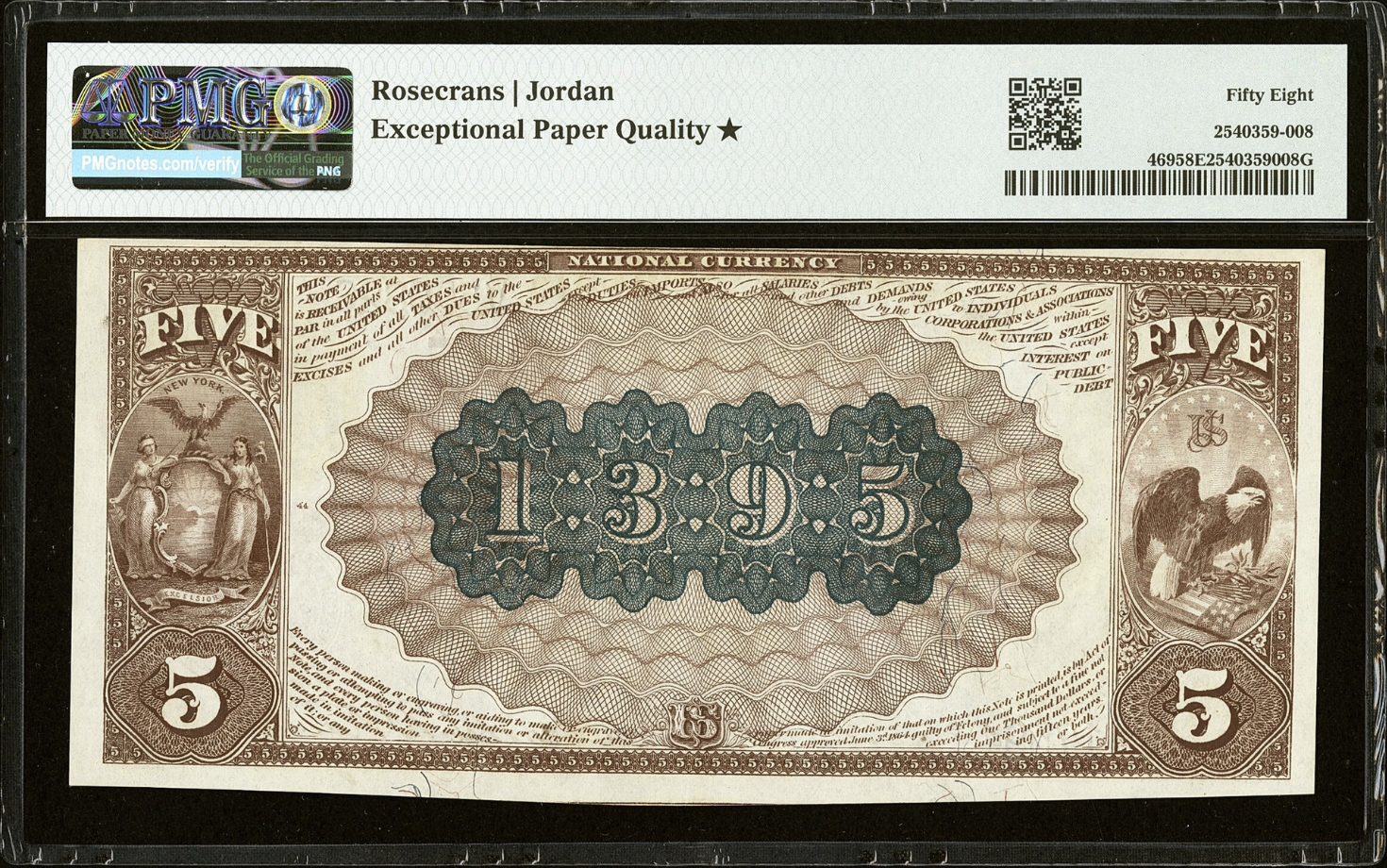
1882 $5 Brown Back • Utica, NY
Charter #1395 | PMG Choice AU 58 EPQ Star (*)
An elite example of "Hometown Currency." This 1882 Brown Back from Oneida County National Bank of Utica represents the intersection of local New York history and massive federal expansion. The PMG "Star" designation denotes exceptional eye appeal.
View The Utica NY Note >The demand for National Banknotes in 2026 is heavily influenced by "territorial provenance." Notes from Western states, particularly Nevada and Arizona, carry a premium because they represent the financial frontier of the late 19th century. This regional disparity highlights how the America250 catalyst is not just a national wave, but a series of localized surges driven by state pride and genealogical research.
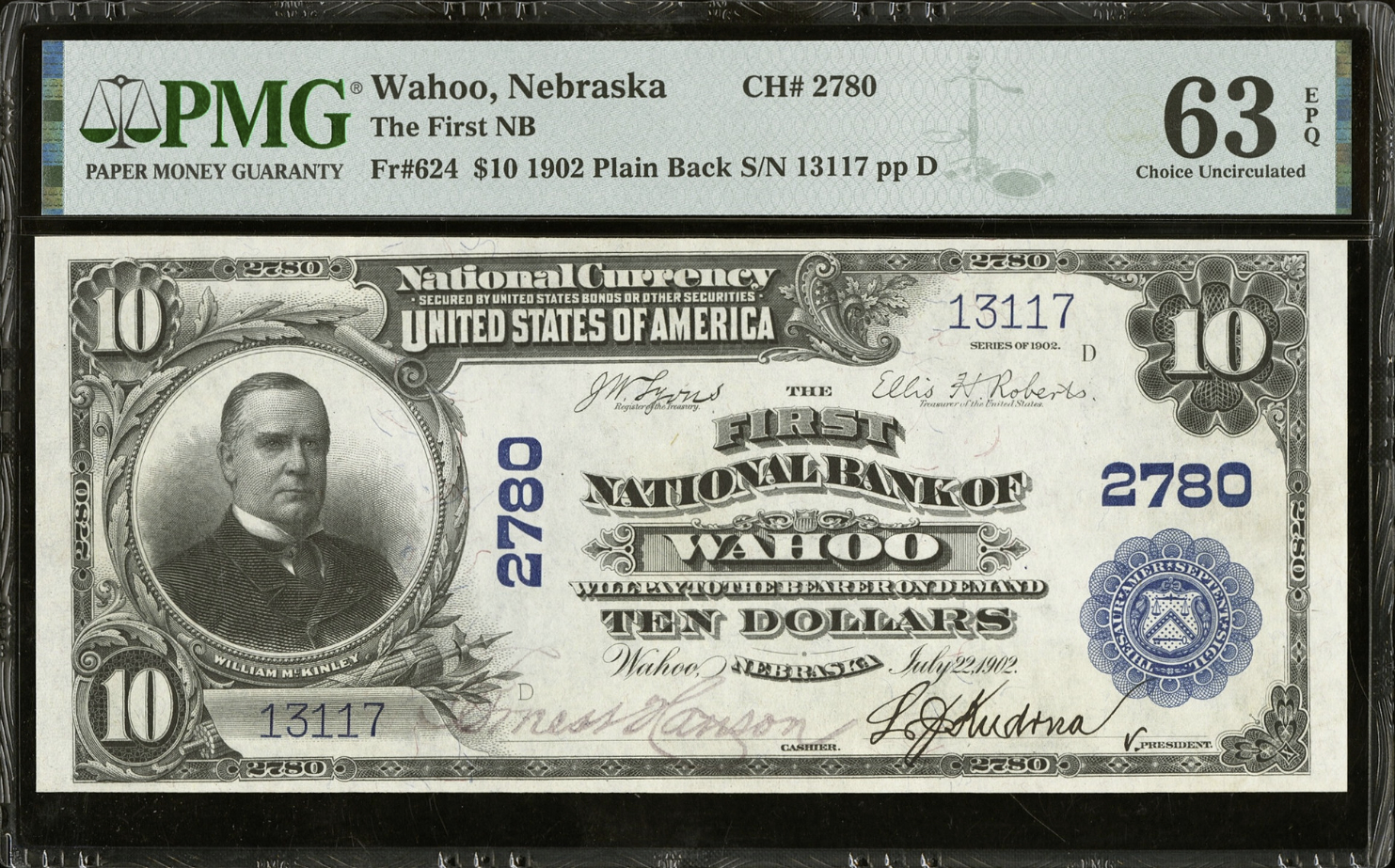
1902 $10 Plain Back • Wahoo, Nebraska
Charter #2780 | PMG 63 EPQ
A stunning piece of Midwestern frontier history. Featuring the portrait of President McKinley, this high-grade Plain Back from Saunders County is a quintessential example of the localized banking era.
View The Wahoo NE Note >Strategic Portfolio Adjustment in the 2026 Environment
Given the high-spot environment and the premium compression in numismatics, expert analysts in 2026 are recommending a strategic rebalancing of portfolios. The traditional "60% Bullion / 40% Numismatic" split is being modified to take advantage of the current "window of opportunity" where bullion is near peak value and collectible coins are relatively underpriced.
| Asset Class | Recommended Action | Rationalization |
|---|---|---|
| Common Silver Bullion | Sell / Trade | High spot price provides maximum liquidity and capital for re-investment. |
| Graded Silver Certificates | Buy / Hold | Undervalued relative to history and metal content; High Semiquincentennial appeal. |
| Graded National Bank Notes | Targeted Acquisition | Rare "hometown" issues offer resilience against regional economic shifts. |
The advice to "sell bullion near peak value" and "acquire premium coins at relatively low premiums" is a direct response to the "sticky" nature of auction prices during rapid spot movements. This rotation allows investors to capture more "gold and numismatic value for their money" before the auction market fully adjusts to the new high-spot reality.
Conclusion: The Enduring Legacy of the 2026 Catalyst
The 2026 Semiquincentennial has acted as a profound catalyst for the repricing of U.S. history, driving a surge in demand for antique Americana that is both cultural and financial. The transition of Graded U.S. National Banknotes and Silver Certificates from specialized collectibles to primary-source historical artifacts reflects a broader societal desire for tangible evidence of the American spirit.
Ultimately, the 2026 repricing is not merely a short-term spike; it is a fundamental re-evaluation of what constitutes a "store of value" in the 21st century. As the nation commemorates 250 years of independence, the artifacts of its financial history—the National Banknotes from its frontier towns and the Silver Certificates from its era of "tangible promises"—stand as the most resilient and meaningful representations of the American journey toward a "more perfect union".
Explore Popular Articles
The America250 Catalyst
The America250 Catalyst How the 2026 Semiquincentennial is Repricing U.S. History The year 2026 rep...

The 2026 Gold Supercycle & The Global Reserve Shift
The 2026 Gold Supercycle A Strategic Analysis of the Longest Monthly Rally in Half a Century and th...

The BRICS Blockade: De-Dollarization & The New Iron Curtain
The BRICS Blockade De-Dollarization and the New Iron Curtain of Currency The year 2026 marks a defi...