
The $17 Billion Signal: Iraq’s "Development Road" & The Dinar’s Path to Global Trade
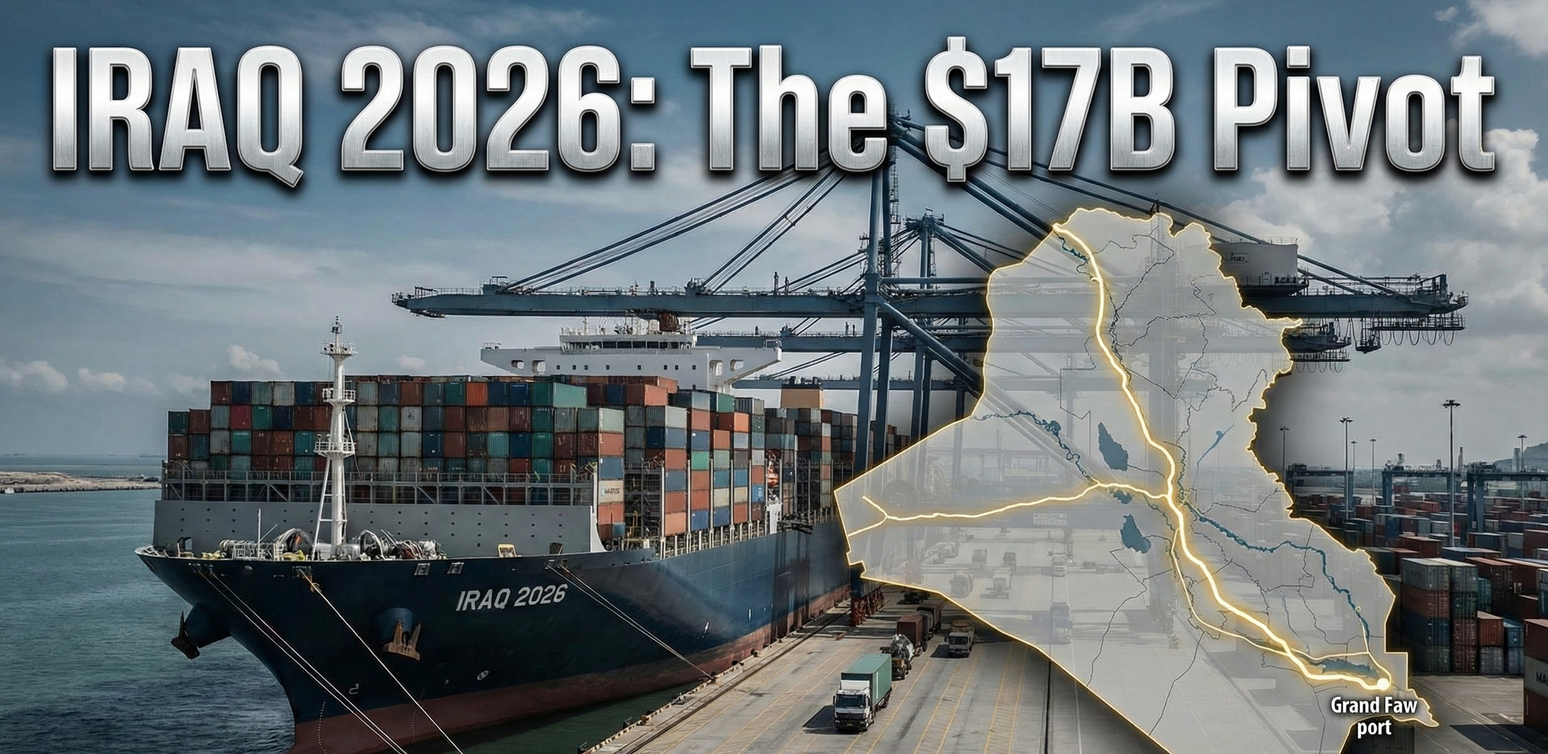
Republic of Iraq: Strategic Economic Reintegration
To: Institutional Wealth Preservation Desk / Investment Committee
Date: January 19, 2026
Subject: Deep-Dive Analysis of Iraq’s Macroeconomic Structural Reforms and Long-Term Value Thesis
1. Executive Strategic Overview
The Republic of Iraq stands at a definitive macroeconomic inflection point as it enters the first quarter of 2026. After two decades defined by conflict, geopolitical isolation, and a rentier-state dependency that tethered national solvency to the vagaries of the crude oil market, the nation is executing a synchronized strategy of infrastructure modernization, regulatory harmonization, and monetary reform. This report provides a comprehensive, deep-dive investigation into the structural catalysts driving Iraq’s reintegration into the global economy.
Our analysis, grounded in confirmed data from the Central Bank of Iraq (CBI), the International Monetary Fund (IMF), the World Bank, and the World Trade Organization (WTO), supports a neutral-to-bullish long-term thesis for the Iraqi economy. The convergence of the operational launch of the Grand Faw Port, the acceleration of the $17 billion Development Road project, and the resumption of WTO accession negotiations signals a decisive shift from "stabilization" to "developmental expansion."
Simultaneously, the Central Bank of Iraq (CBI) has maintained a fixed exchange rate of 1,300 IQD/USD for the 2026 budget while aggressively pursuing de-dollarization through digital payment mandates.
However, the path to normalization is not without friction. The "deletion of zeros" project remains a planned technical redenomination contingent on sustained stability, distinct from the speculative revaluation often circulated in retail markets. Furthermore, while the resumption of Kurdistan Regional Government (KRG) exports via Turkey has alleviated immediate liquidity pressures, the non-oil revenue base remains dangerously low at approximately 10% of total income.
This report evaluates these developments to determine the viability of long-term currency appreciation and economic normalization as investable themes for institutional capital. We posit that while immediate currency appreciation is capped by policy, the structural floor of the economy is rising, reducing sovereign risk and creating a compelling case for long-term engagement.
2. The Monetary Architecture: Sovereignty, Reserves, and Reform
The monetary policy of Iraq in Q1 2026 is characterized by a "developmental central banking" strategy aimed at achieving two primary objectives: stabilizing the domestic value of the Dinar to protect purchasing power, and modernizing the financial architecture to integrate with the global banking system.
2.1 The Exchange Rate Policy: The 1,300 Anchor
The 2026 Federal Budget Law has officially fixed the exchange rate at 1,300 IQD per USD. This decision is significant for several strategic reasons. First, it prioritizes fiscal predictability over monetary flexibility. By anchoring the budget at this rate, the government has signaled to international contractors and investors that it intends to absorb the cost of maintaining the peg rather than subject the market to volatility.
The CBI’s operational framework for 2026 utilizes a tiered structure designed to support bank liquidity while anchoring official policy. The CBI purchases U.S. dollars from the Ministry of Finance at the 1,300 IQD rate, sells to local banks at 1,310 IQD, and mandates that banks offer dollars to the public and traders for external transfers at approximately 1,320 IQD. This structure is designed to cover administrative costs while keeping the spread narrow.
However, a dichotomy persists between this official rate and the parallel market rate. While the gap has narrowed due to improved compliance with the electronic transfer platform and the "Know Your Customer" (KYC) standards mandated by the U.S. Federal Reserve, a spread remains. This spread—often fluctuating between 1,400 and 1,500 in the informal market—reflects the persistent demand for cash dollars in the informal economy and the friction of transitioning a cash-based society to a digital financial system. The CBI views this gap not as a failure of the peg, but as a function of the transition to transparent transfers.
2.2 Foreign Reserves: The Sovereign Shield
Iraq’s foreign currency reserves remain the primary bulwark of its sovereign credit profile. As of March 2025, reserves stood at approximately $98.089 billion. While this represents a slight decline from the peak of over $111 billion seen in 2023/2024, the context of this drawdown is critical. The reduction is largely attributed to the financing of the budget deficit during periods of oil price volatility and the active defense of the exchange rate peg.
| Reserve Metric | Value (Approx.) | Strategic Implication |
|---|---|---|
| Gross Foreign Reserves | ~$98 Billion | Provides >9 months import cover; stabilizes peg. |
| Gold Reserves | ~130+ Tonnes | Diversification against fiat currency volatility. |
| Import Cover | > 9 Months | Exceeds IMF recommended minimums (3-6 months). |
The composition of these reserves has also evolved. The CBI has actively increased its gold holdings, moving up the ranks of global central banks in terms of gold tonnage. This diversification is a strategic hedge against geopolitical risks and the potential long-term depreciation of reserve currencies.
2.3 De-Dollarization and the Cashless Mandate
Perhaps the most aggressive structural reform currently underway is the government's push for "de-dollarization" through the digitization of the payment system. The Iraqi government has issued mandates requiring all government institutions and private sector entities to transition to electronic payment systems, with a target for full government electronic payments by July 2026.
This policy is driven by multiple imperatives:
- Anti-Money Laundering (AML): Electronic payments provide a digital trail that allows the CBI to monitor flows and ensure compliance with international sanctions and AML standards.
- Currency Velocity: Reducing the reliance on physical cash (specifically the USD note) for domestic transactions increases the velocity of the Dinar and enhances the CBI's control over the money supply.
- Revenue Capture: Digital transactions are harder to hide from the tax authority, supporting the desperate need to increase non-oil revenue.
2.4 The "Deletion of Zeros": Redenomination vs. Revaluation
There is persistent confusion in the market regarding the "deletion of zeros." It is imperative for the investment committee to distinguish administrative reform from monetary revaluation.
Governor Ali Al-Alaq stated on record in October 2025 that the project "still exists and is ongoing" but remains in the planning stage. He emphasized that the move will only proceed when economic conditions are stable enough to prevent market chaos.
3. Infrastructure as an Asset Class: The "Dry Canal" Strategy
The most tangible catalyst for Iraq’s economic normalization is the transition from planning to execution in mega-infrastructure projects. The Q1 2026 period marks the operational commencement of assets that have been in development for over a decade, fundamentally shifting Iraq's geopolitical utility.
3.1 The Grand Faw Port: Commercial Launch
The Grand Faw Port is the cornerstone of Iraq's ambition to transform from a terminal economy—where goods arrive for consumption—to a transit economy—where goods pass through for re-export. Following the completion of the five primary berths in late 2024, the port has entered the pre-commercial commissioning phase.
Recent reports from January 2026 indicate advanced negotiations with Abu Dhabi Ports Company (AD Ports Group) to manage the facility. The selection of a GCC operator would be a significant geopolitical signal, cementing Iraq's reintegration with its Arab neighbors and bringing world-class management standards to the facility.
3.2 The Development Road Project ($17 Billion)
The "Development Road" (formerly the Dry Canal) is the logistical artery connecting the Grand Faw Port to the Turkish border at Faysh Khabur. It is a 1,200-kilometer dual rail and highway network designed to serve as a supply chain redundancy for the Suez Canal and a faster route for goods moving from South Asia to Europe.
The Development Road is envisioned as an economic development corridor, not just a transit route. Plans include the establishment of 15 industrial cities alongside the route. This supports the thesis of industrialization required for long-term currency appreciation.
3.3 Financing and The China Connection
While the Development Road involves a coalition of regional partners, China remains Iraq’s dominant partner in broader infrastructure financing. The "Iraq-China Framework Agreement" continues to function as the primary funding mechanism for state projects. Iraq deposits revenue from 100,000 barrels per day (bpd) of oil exports into a Sinosure-backed account. These funds are specifically ring-fenced to pay Chinese contractors for infrastructure projects.
4. Trade Policy: The WTO Accession Accelerator
After nearly two decades of stagnation, Iraq’s accession to the World Trade Organization (WTO) has emerged as a primary policy objective for the Sudani administration. The reconvening of the Working Party (WP) on the Accession of Iraq in July 2024 was a watershed moment, ending a 16-year hiatus.
4.1 Revitalization of the Working Party
The 4th Working Party Meeting is tentatively slated for the course of 2025 (likely early-to-mid year), to review Iraq's comprehensive replies to member questions regarding its foreign trade regime. The outcome of this meeting will be a critical milestone for 2026.
4.2 Strategic Implications of WTO Membership
For the wealth preservation desk, the WTO narrative is a proxy for regulatory certainty. Investment Climate: WTO membership requires the "binding" of tariffs and the transparency of trade rules. This reduces the risk of arbitrary policy changes that have historically plagued foreign investors in Iraq.
5. Fiscal Analysis: Budget, Oil, and the KRG Deal
The fiscal picture remains the area of highest risk but also highest potential for structural reform. The economy's dependence on oil revenues is absolute, but recent developments have stabilized the flow of these revenues.
5.1 The 2026 Budget Framework
The 2026 budget is largely a continuation of the expansionary three-year budget law passed in 2023. Public spending remains high, driven by a massive public sector wage bill. The IMF has explicitly warned that fiscal adjustment is needed.
5.2 Resumption of KRG Exports
A major fiscal bottleneck was cleared in late 2025 with the resumption of oil exports from the Kurdistan Region via the Iraq-Turkey Pipeline (ITP). As of January 2026, approximately 200,000 barrels per day (bpd) of KRG crude are flowing to Ceyhan, contributing to a national total export volume of ~3.6 million bpd.
6. Geopolitical Context: The Regional Balancing Act
Iraq’s economic reintegration is predicated on its ability to balance regional powers. The "Sudani Doctrine" of economic diplomacy seeks to make Iraq a meeting ground for regional interests rather than a battleground.
- Turkey: The Development Road has aligned Turkish and Iraqi interests.
- GCC: Relations with the Gulf Cooperation Council (GCC) have improved markedly. The potential AD Ports contract for Faw would be a crowning achievement of this policy.
- USA: The US Treasury and Federal Reserve exercise significant oversight over the CBI’s dollar auctions, which forces the CBI to modernize its compliance standards.
7. Strategic Outlook & Thesis
7.1 The Bull Case for Normalization
The thesis for long-term currency appreciation and economic normalization rests on the successful execution of the "infrastructure-logistics" pivot. If the Grand Faw Port and Development Road become operational and actively used, Iraq diversifies its hard currency inflows. A diversified economy with a functional tax base and reduced cash reliance reduces the structural demand for the dollar.
7.2 The "Hard Data" Checklist for Q1 2026
- Grand Faw Operator Contract: Confirmation of the signing with a major international operator.
- WTO 4th Working Party Date: A confirmed date for the next meeting.
- KRG Export Volumes: Sustained exports >200k bpd for Q1 2026.
- Electronic Payment Penetration: Reports from the CBI on the volume of POS transactions vs. cash withdrawals.
7.3 Conclusion
Iraq is currently exiting the "post-conflict reconstruction" phase and entering a "developmental expansion" phase. The data confirms that the legislative and physical infrastructure required for a normalized economy is being built. The Grand Faw Port and the Development Road are real, tangible assets that are coming online.
While the "deletion of zeros" remains a future administrative step, the underlying trend is one of strengthening the Dinar through reduced dollarization and economic diversification. For institutional wealth preservation, Iraq represents a high-beta frontier market transitioning toward emerging market status. The currency play is not a short-term arbitrage, but a long-term exposure to a sovereign state recovering its economic weight in the Middle East.
8. Data Appendix: Key Economic Indicators
| Indicator | Status (Q1 2026 Estimate/Actual) | Trend |
|---|---|---|
| Official Exchange Rate | 1,300 IQD / USD | Fixed |
| Foreign Reserves | ~$98 Billion | Stable |
| Inflation Rate | ~3-4% | Moderating |
| Oil Production (Total) | ~3.6 Million bpd | Stable |
| Grand Faw Capacity (Phase 1) | 3.5 Million TEU | Online (2026) |
Secure Your Position
Acquire the 50,000 Iraqi Dinar Note (New/UNC). The highest denomination available for wealth preservation.
Buy 50,000 Dinar Note >Explore Popular Articles

Numismatic Futures
Numismatic Futures 2027: Top 10 Banknotes & Countries to Watch CBDC Impact, Collector Demand & Mar...

Beginner's Guide to World Banknote Collecting
Beginner’s Guide to World Banknote Collecting in 2026 How to Start, What to Buy First & Common Mis...

Guide to Venezuelan Bolivar Digitale
Ultimate Collector’s Guide to Venezuelan Bolívar Digitale Varieties, Hyperinflation History & 2026...