
Iran's New 5 Million Rial Note 2026: Complete Collector's Guide
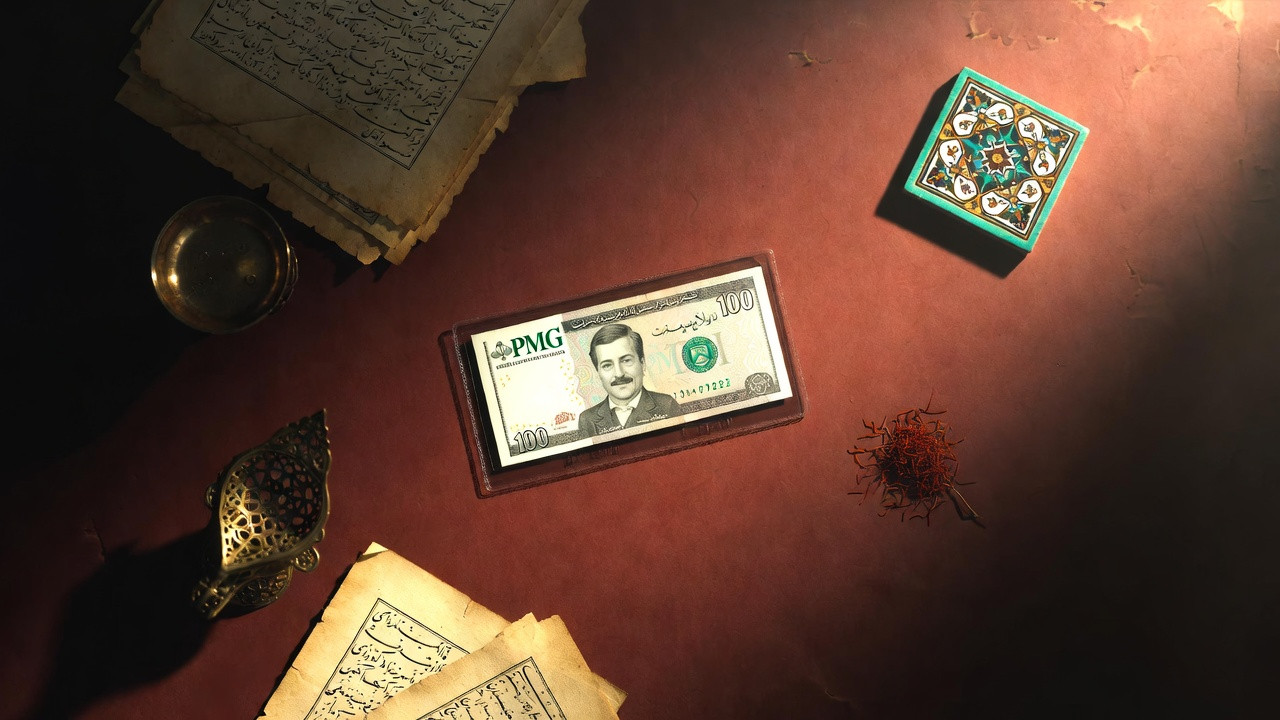
Iran’s New 5 Million Rial Note: A Collector’s Tour of Persian Heritage on Currency
Inside the 2026 Design Featuring the Agha Bozorg Mosque, the Tomb of Ferdowsi, and a Complete Guide to Collecting the Current Iranian Rial Series
In February 2026, the Central Bank of the Islamic Republic of Iran released a striking new variety of the 5 million rial note — a design that continues one of the most visually ambitious numismatic programs in the modern Middle East. Iranian currency has long served as a canvas for the nation’s architectural, literary, and cultural heritage, and the latest issue is no exception. The front depicts the Agha Bozorg Mosque of Kashan, a five-story Qajar-era masterpiece widely regarded as one of the finest examples of Persian Islamic architecture. The back honors the Tomb of Ferdowsi in Tus — the mausoleum of the poet who wrote the Shahnameh, Persia’s national epic.
For collectors of world paper money, this release is an opportunity to revisit one of the most underappreciated collecting areas in modern numismatics. This guide covers the new 5 million rial note in detail, walks through the architectural and literary significance of its designs, explains how Iran Cheques differ from standard banknotes, and outlines a collector’s roadmap for building a complete Iranian Rial set using notes available through established U.S. numismatic channels.
The New 5 Million Rial Note: Design and Security Features
The 2026 variety of the 5 million rial note, catalogued as B304 in The Banknote Book reference system, is a dual-color yellow issue that represents a significant design refresh from earlier 5 million rial Iran Cheques. Every element of the note has been carefully composed, from the architectural focal points to the embedded security features that bring the issue in line with modern international banknote standards.
- Dominant color: Yellow
- Front: Farsi text; Agha Bozorg Mosque of Kashan; denomination rendered as a puzzle number registration device
- Back: English and Farsi text; Tomb of Ferdowsi in Tus; denomination rendered as a puzzle number; “500” numeral printed in gold-to-green SPARK optical ink
- Security thread: 2.5-mm gold-to-green windowed security thread with demetalized “I. R. IRAN” text
- Additional feature: Solid security thread (secondary)
- Category: Iran Cheque (see Section 4 below)
The “puzzle number” registration device on both sides is a deliberately chosen anti-counterfeiting feature: the numeral is printed as two interlocking halves on the front and back that align perfectly when the note is held up to light. Combined with the SPARK optical ink, windowed security thread, and demetalized lettering, the note represents a substantial upgrade over the plainer security profile of earlier rial issues.
The Agha Bozorg Mosque: Why This Building Belongs on Currency
The Agha Bozorg Mosque is not Iran’s largest mosque, nor its oldest. It is, however, widely considered the most architecturally refined building of the entire Qajar era (1789–1925) and one of the most accomplished Islamic structures anywhere in the world from the 19th century. Its inclusion on the 5 million rial note places it in the company of Iran’s most iconic architectural sites — the Imam Reza Holy Shrine, Naqsh-e Jahan Square, and Persepolis — that have appeared on past Iranian banknote issues.
Construction of the Agha Bozorg Mosque began in 1834 during the reign of Mohammad Shah Qajar and was completed during the early reign of Naser al-Din Shah, with the complex finished between 1844 and 1850. The mosque was commissioned by Haj Mohammad Taqi Khanban in honor of his son-in-law, the Shiite scholar Mullah Mahdi Naraqi II — known by the honorific “Agha Bozorg,” meaning “the great one.” The building’s architect, Ustad Haj Sha’ban-Ali, produced what many consider the prototype of Persian symmetric architecture.
Several features distinguish the mosque and explain its selection for a national banknote:
- Five-story construction. The Agha Bozorg Mosque is the only five-story mosque in the world. Its vertical layout integrates prayer halls, a madrasa (religious school), student dormitories, a sunken courtyard, and a subterranean basement connected to traditional windcatchers (badgirs).
- Sunken courtyard design. The mosque’s central feature is a depressed courtyard with a reflecting pool at its center, surrounded on three sides by student dormitories. This architectural solution — known as the “Ghodal Baghcheh” plan — provides natural climate control in Kashan’s harsh desert environment, a signature achievement of traditional Persian engineering.
- Double-layered brick dome. The mosque’s 18-meter brick dome, flanked by two tiled minarets, is one of the tallest structures in Kashan and a technical accomplishment that anticipated modern thermal architecture by more than a century.
- Decorative sophistication. The complex features intricate muqarnas (honeycomb vaulting), stucco work, woodwork, and turquoise Persian tilework in geometric patterns designed by master craftsmen Muhammad Ebrahim and Seyyed Kashani.
- Historical significance. During the Constitutional Revolution of 1905–1911, the mosque served as a meeting place for political activists and intellectuals advocating for democratic reform — one of many chapters in Iran’s long relationship between sacred space and civic life.
The mosque remains an active center of religious learning today, with its library holding over 5,000 books and manuscripts on Islamic theology, philosophy, literature, and history.
The Tomb of Ferdowsi: Persia’s National Poet on the Reverse
If the front of the new 5 million rial honors Persian architecture, the back honors Persian literature — and specifically, the single most important literary figure in the Persian-speaking world. The Tomb of Ferdowsi, located in Tus near the city of Mashhad in northeastern Iran, is the mausoleum of the poet Abu’l-Qasim Ferdowsi (c. 940–1020 CE), author of the Shahnameh, or “Book of Kings.”
The Shahnameh is Persia’s national epic: a 50,000-couplet poem chronicling the mythical and historical past of the Persian world from the creation of humanity to the Arab conquest of the 7th century. Written over roughly three decades and completed around 1010 CE, it is among the longest epic poems ever composed by a single author in any language, and it did for Persian civilization what the Iliad and Odyssey did for Greek civilization — it preserved and transmitted a cultural identity that would otherwise have been lost.
Ferdowsi’s choice to compose the Shahnameh in pure Persian, at a time when Arabic had become the dominant literary language of the Islamic world, is often credited with preserving the Persian language itself. Every major Persian-speaking culture — Iran, Afghanistan, Tajikistan, and the Persian diaspora worldwide — traces its literary self-understanding back to this work.
The current mausoleum was constructed in 1934 during the reign of Reza Shah Pahlavi to mark the millennium of Ferdowsi’s birth. Designed in a monumental neo-Achaemenid style that deliberately evokes the pre-Islamic Persian empires celebrated in the Shahnameh itself, the structure stands as a cultural pilgrimage site drawing visitors from across the Persian-speaking world. Its appearance on the reverse of the 5 million rial pairs Qajar-era religious architecture on the front with Pahlavi-era literary monument on the back — a deliberate composition that spans nearly two centuries of Persian cultural heritage on a single note.
Understanding Iran Cheques: What They Are and Why They Matter
One of the most common points of confusion for collectors new to Iranian currency is the distinction between “standard” banknotes and the higher-denomination “Iran Cheques.” Understanding this structure is essential for anyone building a serious Iranian Rial collection.
Until 2008, the Central Bank of Iran (Bank Markazi) permitted major state banks to print their own bearer traveler’s cheques in fixed, banknote-like denominations. These cheques circulated hand-to-hand just like standard currency, but technically functioned as negotiable instruments rather than legal-tender banknotes. In 2008, the Central Bank revoked this privilege from commercial banks and began issuing its own Iran Cheques directly, in denominations of 500,000, 1,000,000, 2,000,000, and 5,000,000 rials.
For practical purposes — and for collector purposes — Iran Cheques circulate and catalog as banknotes. They appear in standard references (Pick, The Banknote Book), are collected alongside regular Central Bank issues, are graded by PMG and PCGS Banknote, and form an integral part of any complete Iranian currency collection. The distinction matters primarily for historical context: the current 5 million rial note featuring the Agha Bozorg Mosque is formally classified as an Iran Cheque, which is why you may occasionally see it referenced with the designation “Iran-Chek” or “Iran Cheque” in international banknote catalogs.
A Tour of the Current Iranian Rial Series: Architecture, Landscape, and Legacy
The current series of Iranian Rial notes reads like a guided tour of Persian civilization. Each denomination features a significant architectural, geographic, or cultural landmark, and assembling a complete set is essentially assembling a pocket anthology of Iran’s most important heritage sites. Here is what collectors will encounter when building a current-series collection:
| Denomination | Front Design | Back Design |
|---|---|---|
| 500,000 Rial (Iran Cheque) |
Imam Reza Holy Shrine, Mashhad | Mount Damavand (dormant volcano, highest peak in Iran) |
| 1,000,000 Rial (Iran Cheque) |
Central Bank / historic architectural motif | Historic Persian iconography |
| 2,000,000 Rial (Iran Cheque) |
Naqsh-e Jahan Square, Esfahan | Two horsemen playing chogān (traditional Persian polo) |
| 5,000,000 Rial (2026) (Iran Cheque, B304) |
Agha Bozorg Mosque, Kashan | Tomb of Ferdowsi, Tus |
Each of these landmarks is either a UNESCO World Heritage Site or a candidate, and the overall design program reflects a deliberate curatorial choice by the Central Bank: Iranian currency should function as a visual education in Persian heritage. Naqsh-e Jahan Square in Esfahan — featured on the 2 million rial — is one of the largest public squares in the world and a UNESCO World Heritage Site in its own right. Mount Damavand on the 500,000 rial is the tallest peak in the Middle East and the mythological home of the hero Arash in the Shahnameh. The chogān (polo) scene on the 2 million rial reverse depicts a sport that originated in Persia more than 2,500 years ago and whose traditional skills were inscribed on UNESCO’s Intangible Cultural Heritage list in 2017.
Why Iranian Rial Banknotes Appeal to Serious Collectors
For a world banknote collector, the appeal of building an Iranian Rial collection is rooted in several factors that are independent of any broader context:
Design sophistication. Iranian banknotes feature some of the most technically accomplished intaglio work, calligraphy, and architectural illustration in modern world currency. The tradition draws on centuries of Persian miniature painting, tile design, and calligraphy — disciplines in which Iran has been a global leader for nearly a thousand years.
Cultural density. Few national currencies pack as much historical, architectural, and literary content into a single series. Each note rewards research: the buildings have names, the landscapes have mythologies, the figures have biographies. Collectors often report that building an Iranian set deepens their understanding of Persian civilization in ways that no other numismatic area quite matches.
Series completeness within reach. The current Central Bank series is self-contained and modestly sized. A complete denomination set is achievable without the decades-long pursuits required by larger or older programs.
Security feature evolution. Modern Iranian issues incorporate contemporary security technology — SPARK optical inks, windowed security threads, watermarks, and registration devices — making them an interesting study area for collectors interested in banknote security design.
Grading availability. PMG and PCGS Banknote both certify Iranian Rial notes, and the population reports for modern issues remain low relative to demand. Top-grade certified examples are an increasingly recognized segment of the world banknote grading market.
How to Build an Iranian Rial Collection
Here is a practical roadmap for collectors starting or expanding an Iranian Rial collection in 2026:
- Begin with the current denomination set. Work your way up through the 500,000, 1,000,000, 2,000,000, and 5,000,000 rial notes. Even in raw uncirculated condition, a complete current set is attainable at a modest price point, and it gives you a foundation on which to add graded examples later.
- Prioritize the new 5 million rial variety (B304). As the newest release in the series, it has the lowest current supply in Western collector markets and will be the most visually distinctive piece in your set.
- Consider PMG or PCGS Banknote grading for key pieces. For long-term preservation and resale, graded examples in 65 EPQ or higher offer significant advantages. Certified Iranian notes are still relatively uncommon on the open market.
- Explore earlier series for depth. The pre-2008 bank-issued cheques, the early Islamic Republic issues from the 1980s, and the pre-revolution Pahlavi-era notes each offer their own collecting sub-specialties. Pahlavi-era notes featuring the Shah’s portrait with subsequent Islamic Republic overstamps are particularly collectible as transitional issues.
- Store properly. Archival semi-rigid sleeves — the type PBGrade manufactures specifically for modern world currency — provide the best preservation for raw notes. Graded notes should remain in their PMG or PCGS holders.
- Source through established channels. Planet Banknote sources all Iranian Rial inventory through established U.S. numismatic channels, ensuring every note is authentic, legally obtained, and suitable for collector purposes. For more context on the legality of purchasing Iranian banknotes as collectibles in the United States, see our detailed reference page: Is It Legal to Buy Iranian Rial in the United States?
Frequently Asked Questions
The Rial is the official currency of Iran and the unit printed on all banknotes. The Toman is a traditional unit widely used in everyday conversation, equivalent to 10 rials. A 5,000,000 rial note is therefore sometimes referred to colloquially as “500,000 toman.” For collector purposes, all references and catalog designations use the official Rial denomination.
The new 2026 variety is catalogued as B304 in The Banknote Book reference system. An official Standard Catalog of World Paper Money (Pick) number has not yet been assigned at time of writing, as the issue is still new. Catalog numbers will be updated as they are published by the major numismatic references.
The Agha Bozorg Mosque itself is not individually listed, but several of Kashan’s historic structures and gardens — including the Fin Garden nearby — are part of UNESCO recognition for Persian Garden heritage. The mosque is protected as a national heritage site of Iran and is one of the most visited historical buildings in Kashan.
Abu’l-Qasim Ferdowsi (c. 940–1020 CE) is widely considered the most important poet in the history of the Persian language. His epic poem the Shahnameh (“Book of Kings”) is a 50,000-couplet chronicle of the mythological and historical past of the Persian-speaking world, and it is credited with preserving the Persian language during a period when Arabic had become the dominant literary language of the Islamic world. His mausoleum in Tus has been a cultural pilgrimage site for nearly a century, and his inclusion on Iranian currency reflects his status as the literary father of the Persian nation.
Yes. PMG (Paper Money Guaranty) and PCGS Banknote both certify Iranian Rial notes, including modern Iran Cheque issues. Population reports for the current series remain relatively low, and top-grade certified examples (66 EPQ, 67 EPQ, 68 EPQ) are scarce in the international market. Grading is strongly recommended for any collector focused on long-term preservation or future resale.
Planet Banknote sources all Iranian Rial inventory through established U.S. numismatic channels, ensuring that every note is authentic, suitable for collector purposes, and obtained in a manner appropriate for American numismatic commerce. For a detailed reference on the legality of collecting Iranian banknotes in the United States, we maintain a dedicated guide at Is It Legal to Buy Iranian Rial in the United States?
The Collector’s Takeaway
The new 5 million rial note featuring the Agha Bozorg Mosque and the Tomb of Ferdowsi is, above all else, a beautiful piece of modern world currency. It belongs in any serious collection of Middle Eastern banknotes, Islamic architectural numismatics, or modern world paper money more broadly. Paired with the rest of the current Iranian series — the Imam Reza Shrine, Damavand, Naqsh-e Jahan Square, the chogān horsemen — it forms one of the most visually and culturally rich denomination sets in circulation anywhere today.
Planet Banknote maintains inventory across the current Iranian Rial series, with notes available in uncirculated condition and select PMG-graded examples. For questions about specific denominations, graded availability, or building a complete Iranian Rial set alongside adjacent Middle Eastern collecting areas (Lebanon, Iraq, Syria, Yemen, Saudi Arabia), we’re happy to help directly.
Explore Popular Articles
Iran's New 5 Million Rial Note 2026: Complete Collector's Guide
Iran’s New 5 Million Rial Note: A Collector’s Tour of Persian Heritage on Currency Inside the 2026...
Zimbabwe BiG5 ZiG Banknotes 2026: Complete Collector's Guide
Zimbabwe’s New “BiG5 ZiG” Banknotes: The 2026 Release and What It Means for Collectors Inside Zimba...
Is It Legal to Buy Iranian Rial in the United States?
The Answer Before You Read Anything Else Yes — It Is Completely Legal to Buy Iranian Rial Banknot...