


-


1991 Cuba Banco Nacional Specimen 10 & 20 Pesos P-109s P-110s PMG 67 EPQ Set
$299.001991 Cuba Banco Nacional Specimen 10 & 20 Pesos P-109s P-110s PMG 67 EPQ Set This listing features a vibrant two-note specimen set from the Banco Nacional de Cuba, both dated -


1967-1991 Cuba Banco Nacional Specimen 5 & 10 Pesos P-103s 104s 108s PMG 3-Note Set
$349.001967-1991 Cuba Banco Nacional Specimen 5 & 10 Pesos P-103s 104s 108s PMG 3-Note Set This lot brings together three Banco Nacional de Cuba specimen notes spanning the heart of the revolutionary... -


1950 Cuba 100 Pesos Banco Nacional PMG 66 EPQ P-82a Aguilera ABNC Pre-Revolution Type Note
$228.001950 Cuba 100 Pesos Banco Nacional PMG 66 EPQ P-82a Aguilera ABNC Pre-Revolution Type Note Presented here is a classic 100 pesos note from the Banco Nacional de Cuba, series of -
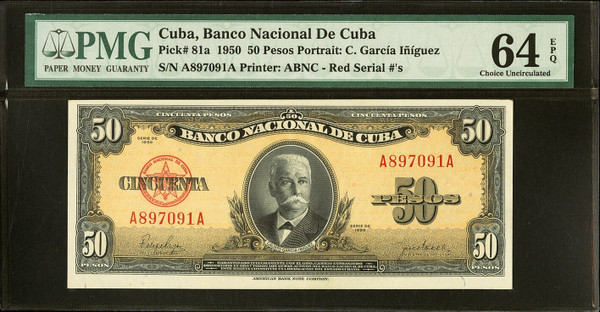
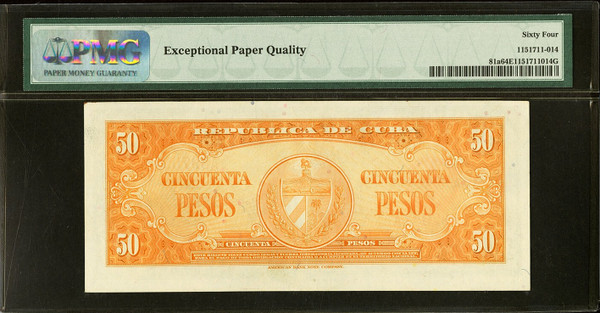
1950 Cuba 50 Pesos Banco Nacional PMG 65 EPQ Gem UNC Pick 81a Calixto Garcia Iñiguez
$144.001950 Cuba 50 Pesos Banco Nacional PMG 65 EPQ Gem UNC Pick 81a Calixto Garcia Iñiguez Offered is a handsome 1950 50 Pesos note from
Description
1961 Cuba Banco Nacional Specimen Set 1–100 Pesos P-94s 97s 98s 99s PMG
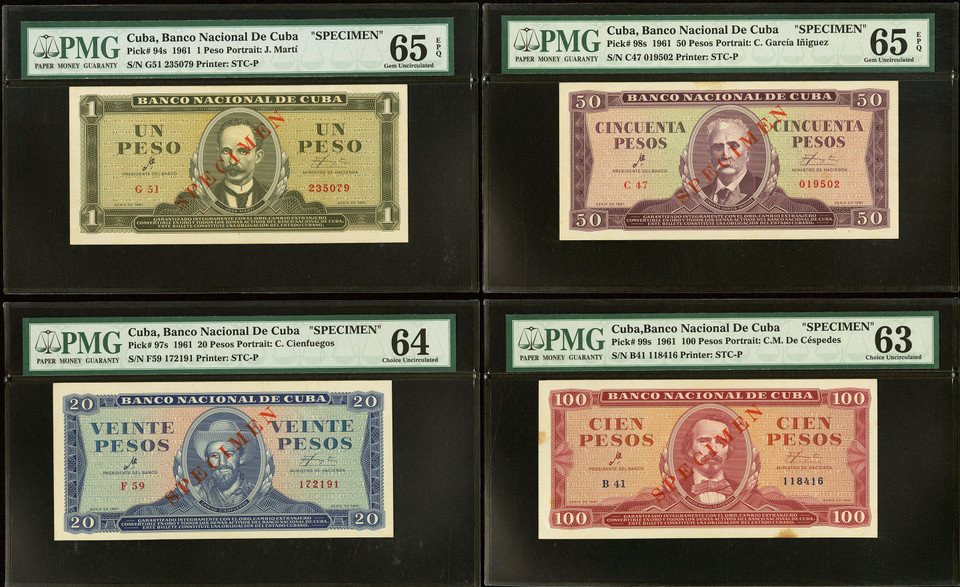
Offered here is a historic four-note specimen set from the Banco Nacional de Cuba, dated 1961 and spanning the full range from 1 to 100 pesos. All four notes are PMG-certified and bear bold diagonal “SPECIMEN” overprints with matching red serials, making them ideal reference pieces for the post-revolution Cuban series.
The set includes:
-
1 Peso – Pick 94s – Portrait: José Martí – PMG 65 EPQ
-
20 Pesos – Pick 97s – Portrait: Camilo Cienfuegos – PMG 64
-
50 Pesos – Pick 98s – Portrait: Calixto García Íñiguez – PMG 65 EPQ
-
100 Pesos – Pick 99s – Portrait: Carlos Manuel de Céspedes – PMG 63
All were printed by STC-P, the state security printer used by revolutionary Cuba in cooperation with Eastern Bloc partners.
Historical significance
Dated just two years after the 1959 revolution, these 1961 issues are among the first full circulating designs of the new revolutionary regime. The choice of portraits reads like a condensed history of Cuba’s independence struggle and revolutionary narrative:
-
José Martí on the 1 peso, the martyred poet-patriot whose writings inspired the fight for independence.
-
Camilo Cienfuegos on the 20 pesos, one of Fidel Castro’s most charismatic commanders in the Sierra Maestra.
-
Calixto García Íñiguez on the 50 pesos, a key 19th-century general in the wars against Spain.
-
Carlos Manuel de Céspedes on the 100 pesos, the “Father of the Homeland,” who launched the Ten Years’ War in 1868.
Together, the notes link the 19th-century independence heroes with the 20th-century guerrilla leaders, visually legitimizing the new government and its revolutionary program.
Design and features
Each denomination has its own distinctive color and revolutionary vignette, beautifully engraved and rich with symbolism:
-
1 Peso (green) – Martí’s portrait appears on the face, framed by ornate scrollwork and classic Banco Nacional typography. The reverse shows a triumphant revolutionary crowd entering Havana, symbolizing the victory of January 1959 and the dawn of the new republic.
-
20 Pesos (blue) – The obverse bears the rugged portrait of Camilo Cienfuegos, with the denomination VEINTE PESOS in large, clear lettering. On the reverse, an armed rebel stands in the foreground with comrades marching behind him, capturing the image of the guerrilla fighter and the rural base of the revolution.
-
50 Pesos (violet/purple) – Calixto García is depicted in formal military dress on the front, underscoring the continuity with earlier independence wars. The back shows a scene of industrial development and workers under the national flag, highlighting modernization and the new economic direction of the country.
-
100 Pesos (red) – The highest denomination features Carlos Manuel de Céspedes on the face, surrounded by strong geometric elements and bold CIEN PESOS counters. The reverse carries a dramatic battle scene referencing the assault on the Moncada barracks, a defining event in the revolutionary epic.
All four notes share consistent design language: strong borders, crisp guilloché patterns, multi-tone underprints, and detailed vignettes. The red “SPECIMEN” overprints and special serial numbers clearly mark them as non-circulating examples prepared for banks, archives, and foreign correspondents.
Remarkable multi-denomination set
A complete specimen set from 1 to 100 pesos allows the collector to appreciate the full visual and ideological program of Cuba’s 1961 issue in one cohesive group. From low to high value, the design progression moves from mass mobilization to guerrilla warfare, industrial development, and major revolutionary milestones—something that single notes cannot convey as fully on their own.
Catalog and reference
-
Country: Cuba
-
Issuer: Banco Nacional de Cuba
-
Date: 1961
-
Denominations & catalog numbers:
-
1 Peso – Pick 94s – José Martí
-
20 Pesos – Pick 97s – Camilo Cienfuegos
-
50 Pesos – Pick 98s – Calixto García Íñiguez
-
100 Pesos – Pick 99s – Carlos Manuel de Céspedes
-
-
Printer: STC-P
-
Type: Specimen banknotes with red diagonal overprints
-
Holder: PMG (Paper Money Guaranty)
Collector’s value
For the specialized collector of Cuban or Cold War-era paper money, this four-note 1961 specimen set is especially desirable. It unites key independence and revolutionary figures, dramatic propaganda-style reverses, and high-quality engraving in one matched group, each piece authenticated and graded by PMG. Complete, original specimen sets from this period are far scarcer than individual notes and make an outstanding centerpiece for any collection focused on Latin America, world specimens, or political history on paper.